U.S. Brokerages: Handle Negative Commissions Without Cutting Pay

When a commission goes negative, the first move is to document the reversal, place a hold on the affected payout, and apply only the recovery method your signed commission policy already authorizes. Any recovery must keep the rep’s pay at or above required minimum wage thresholds. The sections below walk through the legal boundaries, the accounting steps, and the system features that make this process defensible instead of chaotic.
TL;DR:
- Reversals triggered by product returns, chargebacks, or billing errors require distinct documentation and recovery methods to ensure legal compliance.
- Recoveries must be authorized in writing before the deduction and must not reduce the employee’s pay below minimum wage thresholds.
- An automated commission system should track negative balances, place payout holds, and require approval workflows to prevent errors and disputes.
- A clear clawback policy must specify triggers, notice and appeal windows, and recovery options to maintain enforceability and fairness.
- Manual reconciliation methods are prone to oversight; implementing an automated, compliant payout workflow reduces errors and improves auditability.
Table of Contents
- What negative commissions, chargebacks, and clawbacks actually mean
- U.S. wage law limits on recovering commissions
- The operational workflow for processing a negative commission
- Designing a clawback policy that actually holds up
- System features that prevent and manage negative balances
- How BrokerPay approaches compliant commission reversals
- Where teams go wrong on commission reversals
- Get compliant commission handling without the manual work
- Where to verify the legal details
- Sources
- FAQ
What negative commissions, chargebacks, and clawbacks actually mean
These three terms get used interchangeably, but they describe different moments in the same problem. A negative commission happens when a rep’s commission balance drops below zero, usually because a sale that already paid out gets reversed. A chargeback is the specific transaction event that triggers the drop: a customer dispute, a returned product, or a canceled order pulling money back out of the business. A clawback is the employer’s formal act of recovering commission already paid, through a future offset, a repayment plan, or, where lawful, a payroll deduction.
Commission administrators need to track the trigger, not just the balance. Common causes include:
- Product returns or canceled subscriptions that reverse revenue after commission was already paid
- Payment processor chargebacks, where a customer disputes a charge weeks or months later
- Billing or pricing errors that caused the original commission to be calculated too high
- Failed closings or escrow reversals in real estate, where a deal falls through after a commission advance
- Duplicate or fraudulent orders that get reversed during fulfillment review
Each trigger implies a different fix. A pricing error usually means a one-time correcting entry. A failed closing often means the commission was a draw against a deal that never funded, which changes how you are legally allowed to recover it. Mapping the cause to the correct recovery path before you touch a paycheck is the single habit that prevents most downstream disputes.
U.S. wage law limits on recovering commissions
Federal wage law does not forbid clawbacks, but it puts a hard floor under how far a deduction can go. Under the Fair Labor Standards Act, an employer generally cannot reduce an employee’s pay below minimum wage through deductions, even when the deduction is meant to recover money the company believes it overpaid. The regulation at 29 C.F.R. § 4.168 states plainly that unauthorized deductions cutting into required minimum wage are not allowed, and only specific authorized deductions are permitted.
That means a payroll deduction for a negative commission is lawful only when it is authorized in advance, usually through a signed agreement the employee agreed to before the deduction occurred, and only when it does not push the rep’s effective hourly pay under the floor for that pay period. Draws against future commissions sit in a related but distinct category. The regulatory commentary in 29 C.F.R. § 779.416 explains when a draw or guarantee still qualifies as a commission and when the underlying plan counts as a bona fide commission arrangement, which matters if you intend to offset a draw against commissions earned later.
For commissioned employees in retail or service roles claiming the Section 7(i) overtime exemption, the rules get more specific. The Department of Labor’s Fact Sheet #20 lays out the three conditions for that exemption, including a representative-period test and recordkeeping obligations employers must maintain to support it.
A Department of Labor opinion letter clarifies that to treat payments as commissions for exemption purposes, total commissions over the representative period must be primarily greater than other compensation, and the letter addresses when tips can count toward that test. Getting the representative period wrong is one of the most common ways employers accidentally misclassify a commission plan.
Before processing any recovery, payroll and HR should confirm:
- The deduction or offset is authorized by a signed agreement predating the disputed sale
- The recovery will not drop the rep’s pay below minimum wage for that period
- The commission plan’s representative period and recordkeeping match what Fact Sheet #20 requires if a 7(i) exemption is in play
- The documentation trail (trigger, approval, amount, method) is complete before the deduction is applied
The operational workflow for processing a negative commission
Once a trigger is identified, treat it as a four-stage process: triage, document, adjust, and recover. Skipping a stage is what turns a routine reversal into a dispute.
- Flag and hold. The moment a chargeback, return, or error is identified, flag the related commission in the system and place a hold on any portion of the payout not yet disbursed.
- Notify. Alert payroll and the rep’s manager the same day, with the trigger type, amount, and transaction reference attached.
- Document. Attach supporting evidence (the return receipt, the chargeback notice, the corrected invoice) to the commission record before any adjustment is made.
- Record the reversal. If the original commission has not yet been paid out, reverse the accrual entry in the general ledger. If it has already been paid, record a receivable from the rep or an offset against the next commission run.
- Choose the recovery method. Offset against the rep’s next earned commission when possible. Use a structured repayment plan when offsetting would take too long. Use a direct payroll deduction only when a signed agreement permits it and the minimum-wage floor is not breached.
- Get sign-off. Route the adjustment through a manager or finance approver before it posts, with the supporting documentation attached to that approval.
- Close the loop. Notify the rep in writing, showing the original commission, the trigger, the recovery method, and the remaining balance if any.
Timing matters more than most admins expect. If the commission was accrued but not yet paid, a straightforward reversing journal entry in the current period is usually enough. If the payroll cycle has already closed and funds are already in the rep’s account, do not attempt to retroactively debit a bank account. Instead, record the reversal in accounting with a memo to payroll describing the planned offset, then apply that offset against the next commission run.
When a straight deduction would cut pay below minimum wage, the lawful path is almost always an extended repayment plan or a future offset spread across multiple pay periods rather than a one-time deduction. That keeps the recovery legal while still getting the company its money back.
Pro Tip: Build the repayment schedule before you tell the rep about the deduction, not after. A concrete plan in hand turns a difficult conversation into a logistics conversation.
Designing a clawback policy that actually holds up
A policy that only lists triggers is incomplete. To be enforceable and fair, a commission clawback policy needs to spell out notice, appeal rights, and timelines as clearly as it spells out the dollar mechanics.
- Triggers: name the specific events (returns, chargebacks, failed closings, billing errors) that can cause a reversal
- Notice period: specify how quickly the rep is informed after a trigger is identified, ideally within a few business days
- Appeal window: give reps a defined window, often somewhere around ten to fourteen calendar days, to dispute the reversal internally before recovery begins
- Repayment options: list the available methods (offset, installment plan, payroll deduction where lawful) and who chooses among them
- Recordkeeping: require that every reversal, approval, and repayment plan be logged with timestamps and attached evidence
Sample policy language should state the mechanism plainly: “Commissions subject to chargeback, return, or cancellation within [the plan’s stated window] may be recovered through offset against future commissions or an agreed repayment schedule.” That kind of clause needs review from employment counsel before it goes into a signed agreement, since enforceability varies by how the commission plan itself is structured.
Fairness is not just a morale issue, it is a documentation issue. A short appeal window with a real internal review, rather than an automatic deduction the moment a chargeback posts, tends to produce fewer escalations and a cleaner audit trail if the recovery is ever questioned. Version-control your policy document itself: every revision should be dated and distributed with an acknowledgment, so you can show which version applied to any given rep at any given time.

System features that prevent and manage negative balances
Spreadsheets and ad-hoc Venmo or Zelle transfers cannot produce the audit trail this process requires. A commission system built for this job needs a specific set of capabilities.
- Negative-balance ledgers that track a rep’s running balance rather than treating each commission as a standalone payment
- Payout holds that automatically pause disbursement on a flagged transaction before money leaves the account
- Automated offsets that apply recovery against the next qualifying commission without a manual spreadsheet calculation
- Approval workflows that require a named manager or finance lead to sign off before any reversal posts
- Full audit trails showing the trigger, the documentation, the approver, and the final adjustment in one record
Integration with the CRM and billing system matters as much as the ledger itself. If a cancellation in the billing platform does not automatically flag the related commission record, someone has to catch it manually, and manual catches are where chargebacks slip through unrecorded for months. Exception reports that surface reps with repeated reversals or unusually high refund rates let managers coach the specific behavior driving the pattern instead of reacting case by case. Enterprise teams managing larger pay periods and deduction volumes often need this kind of structured operational guidance on monitoring earnings and deductions to keep the process consistent across a growing headcount.
How BrokerPay approaches compliant commission reversals
BrokerPay is built specifically for real estate brokerages managing agent splits, referral fees, and co-op commissions, and its design reflects the same principles outlined above.
- Every commission adjustment runs through an audit trail that ties the reversal to its trigger and approver
- Cap tracking and approval workflows mean a reversal cannot post without a named sign-off
- Funds route through brokerage-controlled accounts rather than informal transfers, which keeps the payment itself documented from end to end
For a brokerage, that structure matters because a failed closing or an escrow reversal is exactly the kind of trigger that creates a negative commission in the first place. A platform that logs the hold, the documentation, and the offset in one record removes the guesswork that ad-hoc payment methods introduce, and it gives the brokerage something defensible to show if a recovery is ever questioned.
Where teams go wrong on commission reversals
Most commission disputes do not start with the dollar amount. They start with the rep finding out about a deduction after it already hit their paycheck, with no documentation and no chance to ask a question first. The policy on paper rarely fails; the notification process around it does.

My actual recommendation is to treat the appeal window and the written notice as the non-negotiable parts of the process, more than the recovery method itself. A repayment plan a rep understands and agreed to in advance will almost never turn into a legal problem. A payroll deduction a rep discovers after the fact, even a legally compliant one, damages trust and invites a complaint regardless of whether the math was correct.
Before your next reversal, confirm three things: the policy is current and signed, payroll has tested the deduction against a minimum-wage check, and the system is set to hold payouts automatically rather than relying on someone remembering to flag a transaction.
— Wes
Get compliant commission handling without the manual work
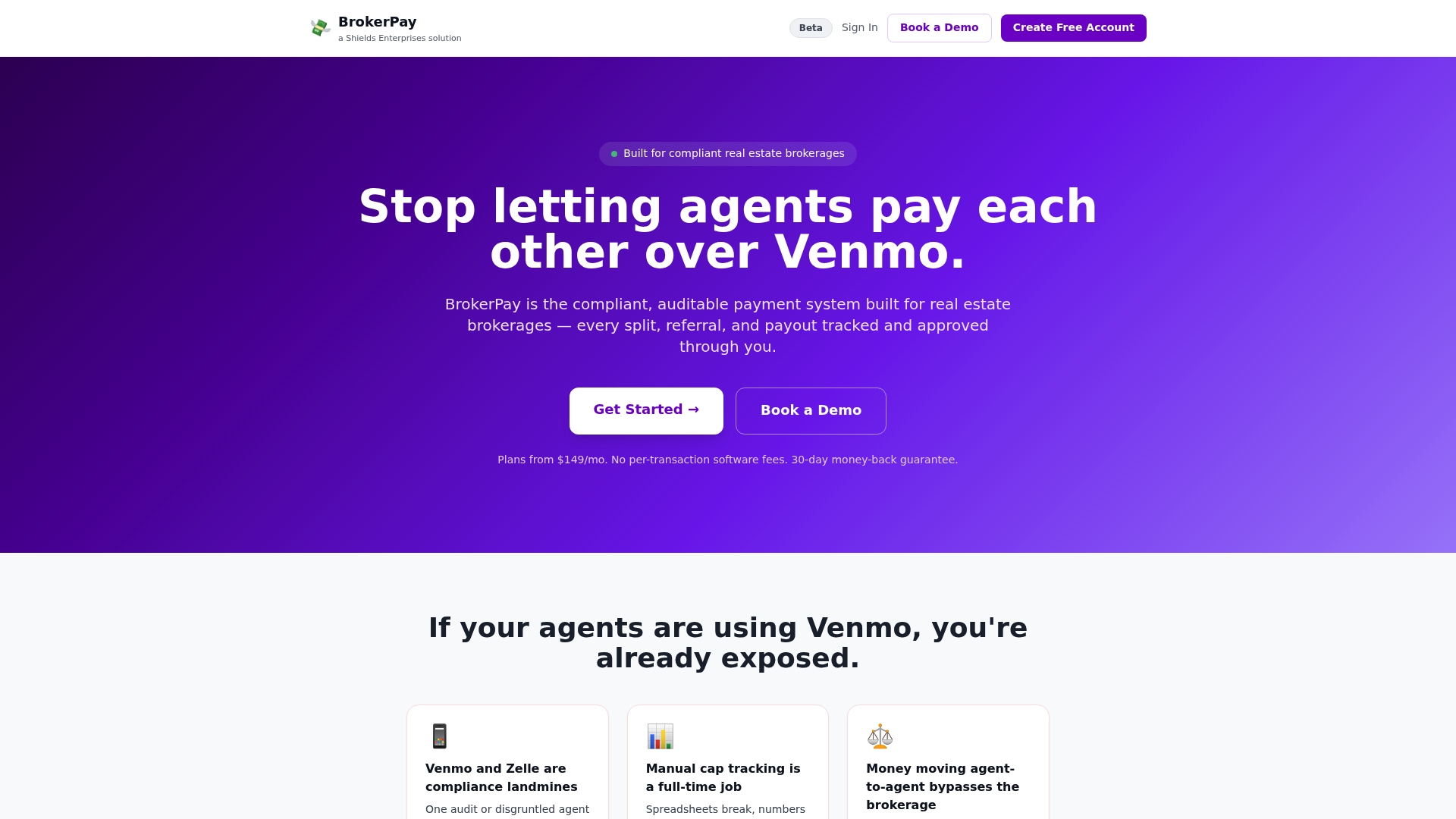
Handling a negative commission by spreadsheet means someone has to remember every trigger, every approval, and every offset, and that someone eventually misses one. BrokerPay replaces that manual tracking with a payment workflow built for brokerages: cap tracking, approval chains, and an audit trail on every adjustment, all routed through brokerage-controlled accounts instead of informal transfers.
- Commission splits, referral fees, and co-op payments all run through one auditable system instead of scattered spreadsheets and payment apps
- Pricing is based on subscription plans available for different brokerage sizes.
- A 30-day refund guarantee if the platform does not fit your brokerage’s workflow
If your brokerage is still reconciling reversals by hand or routing payments through Venmo or Zelle, it is worth seeing how an automated, compliant payout workflow handles the same problem. Visit BrokerPay to check plan details and get started.
Where to verify the legal details
Commission recovery rules get specific fast, and the sources below are the ones to check directly rather than take secondhand.
- The Department of Labor’s opinion letter on representative-period tests for commission exemptions
- Fact Sheet #20 on commissioned employees in retail and service establishments
- 29 C.F.R. § 4.168 on permissible wage deductions
- For a case-specific situation, especially one involving a dispute already underway, consult employment counsel such as a firm handling commission and bonus disputes rather than relying on general guidance.
Sources
- 29 C.F.R. § 4.168 — Deductions from wages paid
- Fact Sheet #20: Employees paid commissions by retail establishments — U.S. Department of Labor
FAQ
What are commission chargebacks?
A commission chargeback happens when a sale that already generated a paid commission gets reversed, usually through a returned product, a canceled order, or a payment processor dispute. The company then needs to recover the commission already paid, typically through an offset against future earnings or a repayment plan.
Can a company legally take away sales commission?
A company can recover a commission already paid, but only through methods authorized in a signed agreement, and any payroll deduction cannot reduce pay below the minimum wage floor set out in 29 C.F.R. § 4.168. Recovery without a prior written agreement, or recovery that cuts into required wages, raises real wage-and-hour risk.
What is an example of an error of commission?
An error of commission in this context is a mistake in how a commission was calculated or applied, such as a billing system pricing an order incorrectly and paying out a commission on the wrong amount. The fix is a correcting journal entry and a documented adjustment, not a surprise deduction from the rep’s next paycheck.
Can you give me an example of a draw against commission?
A draw against commission is an advance paid before a sale is fully earned or closed, with the expectation that future commissions will offset it. Whether that draw legally counts as a commission, and whether a company can offset it against later pay, depends on how the plan is structured under rules described in 29 C.F.R. § 779.416.