Triage Commission Fraud Red Flags: Evidence Checklist for Brokerages

Commission fraud red flags are payments tied to referral counts, unearned splits, or marketing fees without real deliverables: the immediate move is to freeze the payout and open an evidence ticket before releasing funds. This matters because RESPA Section 8 makes referral-based compensation a federal compliance risk, not just an internal accounting problem.
TL;DR:
- Payments that change with referral volume or closing success are high-risk and should be reviewed first during audits.
- Routing payments through personal accounts or peer-to-peer apps like Venmo and Zelle creates audit gaps and increases fraud suspicion.
- Documentation proving services were performed must include invoices, signed acceptance, and market comparables, not just contractual promises.
- Implementing strict approval workflows, fair-market-value policies, and centralized control significantly reduces commission fraud risks.
- Regularly auditing active MSAs and moving payments to broker-controlled accounts helps stay compliant and prevent costly enforcement actions.
Table of Contents
- 1. Top red flags that signal commission or referral fraud
- 2. A practical audit checklist to verify suspected commission fraud
- 3. Controls and policies to prevent commission fraud and stay RESPA-compliant
- 4. Documentation standards for proving services actually performed
- 5. How a compliance-focused payment workflow closes these gaps
- 6. Why enforcement trends make conservative controls worth it
- 7. Next steps to reduce commission fraud risk now
- Sources
- FAQ
1. Top red flags that signal commission or referral fraud
Most commission fraud in brokerage payments follows a small number of patterns. Knowing them lets a compliance manager triage a suspicious payout in minutes instead of days.
- Payments structured as flat fees tied to defined services rather than varying with referral counts, closings, or success bonuses.
- Marketing Services Agreements or “consulting” fees without measurable deliverables and fees consistent with documented market rates.
- Funds routed to personal accounts or peer-to-peer apps like Venmo or Zelle instead of broker-controlled accounts.
- Last-minute changes to commission splits, undocumented off-MLS offers, or missing written buyer or seller approval.
- Invoices for services that were never performed, or duplicate line items on settlement statements.
- Payees without proper tax documentation on file, risking missing 1099 reconciliation.
The CFPB’s compliance bulletin on RESPA and MSAs notes that payments varying with referral volume or tied to closing success are treated by investigators as strong evidence of a kickback, even when the contract calls it a marketing or service fee. That single fact should reorder your priorities: a flat monthly retainer for genuine advertising work looks nothing like a bonus scaled to how many deals closed.
Pro Tip: Sort every active MSA and referral arrangement by whether the payment amount could change if referral volume changed. If yes, review it first.
2. A practical audit checklist to verify suspected commission fraud
Once a payout looks suspicious, the audit itself needs structure. Investigators and compliance officers rely on the same core sequence.
- Pull every document tied to the transaction: MLS entries, broker-to-broker agreements, MSAs, vendor invoices, deliverable proof, the settlement statement, and the payee’s W-9.
- Trace the actual payment path. A wire or ACH transfer to a brokerage-controlled account is normal; a Venmo or Zelle receipt to a personal account is not.
- Compare the payment amount against documented market comparables for the same service, and check whether the amount correlates with referral counts over time.
- Interview the parties involved: who initiated the referral, what work was actually done, and can a third party confirm the deliverable independently.
- File everything under a consistent index (transaction ID, date, approval chain) and retain it long enough to survive a regulatory inquiry.
Payments priced well above documented market comparables for the same service are one of the clearest quantitative markers investigators use, according to Regulation X’s treatment of RESPA Section 8, which requires that any fee split reflect services actually performed at a defensible fair market value. Without a comparable rate sheet or contemporaneous quote on file, an internal note claiming “market value” carries little weight in an actual review.
3. Controls and policies to prevent commission fraud and stay RESPA-compliant
Detection matters less than prevention. A brokerage that builds the right controls rarely needs the audit checklist above.
- Adopt a strict MSA policy: every marketing or service agreement needs an objective fair-market-value process and cannot scale with referral volume.
- Require written seller authorization before any buyer-broker compensation is paid, consistent with current broker-to-broker agreement practices.
- Build dual sign-off into the approval workflow for any non-standard payout, with a pre-close hold and an escrow-based path for disputes.
- Route all commission payments through broker-controlled accounts using audited ACH or escrow workflows, never Venmo or Zelle. A real estate payment gateway built for this purpose keeps that routing consistent.
- Run automated anomaly detection on payment patterns, volume, and timing, with thresholds that trigger manual review.
- Collect a W-9 before the first payment and reconcile it against 1099 filings every year, a step commission tracking systems are built to enforce automatically.
Pro Tip: Set your anomaly detection threshold on referral-linked payments first. That single category produces the most enforcement-relevant red flags.
4. Documentation standards for proving services actually performed
Regulators do not take a brokerage’s word that a fee was earned. They want documentation that a service happened and that the price was fair.
Proof of performed services means vendor invoices with dates, deliverables with timestamps, actual media placements, and a signed acceptance of the completed work, not just a contract promising future work. Fair market value needs comparables: rate sheets from similar vendors and contemporaneous quotes gathered at the time the agreement was signed, not reconstructed later.
- Draft MSAs with an objective, fixed scope and measurable deliverables, never a fee that scales with referral volume or closing success.
- Attach a deliverable log to every payout: what was promised, what was delivered, and who signed off.
- Keep a market-rate comparison on file for every marketing or service fee above a set dollar threshold.
- Index every record by transaction ID and link it to the corresponding settlement statement line.
Examples of documented co-op payment workflows show what this looks like when the approval trail and the deliverable proof sit in the same record.
5. How a compliance-focused payment workflow closes these gaps
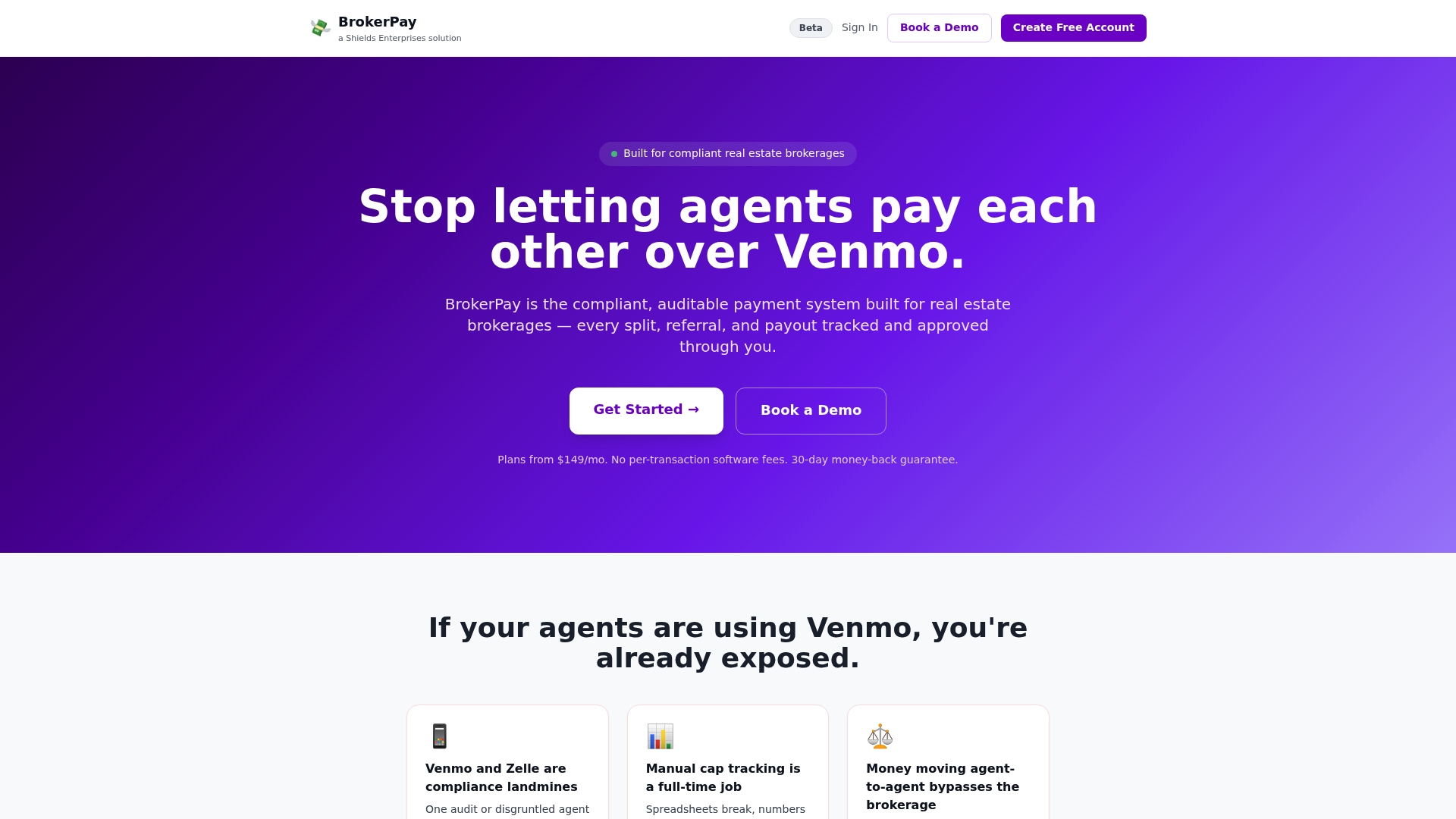
BrokerPay routes agent splits, referral fees, and co-op commissions through brokerage-controlled accounts with built-in approval workflows and a full audit trail, addressing the exact gaps above: no P2P receipts to trace, no missing W-9s, and no payout released without documented sign-off. Cap tracking and centralized documentation replace the scattered spreadsheets and side conversations where fraud tends to hide.

6. Why enforcement trends make conservative controls worth it
MSA-related kickback cases have drawn sustained CFPB and HUD scrutiny for years, and settlements carry fines and lasting reputational damage. A brokerage that documents fair market value and blocks informal payment channels before a dispute arises spends far less defending itself later.
— Wes
7. Next steps to reduce commission fraud risk now
Start with the checklist above: freeze any payout that shows a referral-linked pattern, pull the documentation, and tighten approval rules so no single person can release funds alone.
- Run the audit checklist against every active MSA and co-op split this quarter.
- Move commission payments off Venmo and Zelle and onto broker-controlled ACH routing, as covered in these commission payment alternatives.
- Automate the approval trail so W-9 collection and deliverable proof happen before, not after, a payout goes out.
The platform’s plans are built around a workflow that includes cap tracking and audit-ready documentation. You can see how the platform fits your brokerage at Brokerpay.
Sources
- CFPB compliance bulletin 2015-05 (RESPA and MSAs)
- Prohibition against kickbacks and unearned fees — CFPB (Regulation X §1024.14)
- Broker-to-Broker Agreements 101 — NAR
FAQ
What counts as a commission fraud red flag under RESPA?
A payment that varies with referral volume, closing success, or lacks proof of actual services performed is the clearest red flag under RESPA Section 8. Marketing fees without deliverables and payments routed to personal accounts fall into the same category.
Are marketing services agreements always illegal under RESPA?
No, an MSA is lawful when it pays a fixed, documented fee for real services delivered at fair market value. The CFPB has warned that many MSAs are structured to disguise referral payments, so the deliverables and pricing need contemporaneous documentation.
Why is paying commissions through Venmo or Zelle risky?
Peer-to-peer payments bypass broker-controlled accounts and leave no audit trail linking the payment to a documented service or approval. That gap is exactly what compliance investigators look for when tracing a suspected kickback.
Does a brokerage need written seller approval for buyer-broker compensation?
Yes, current broker-to-broker practice guidance requires express written seller approval before any compensation is offered to a buyer’s broker. Missing or informal approval is treated as a documentation red flag during an audit.
How does BrokerPay help with commission fraud prevention?
BrokerPay routes agent splits, referral fees, and co-op commissions through brokerage-controlled accounts with built-in approval workflows and audit trails, replacing informal Venmo or Zelle payments. Pricing details for the Starter, Growth, and Enterprise plans are available at Brokerpay.