Brokerages: 5 Controls for RESPA Compliant Bulk Commission Payouts

The right approach is automated, RESPA-compliant batch processing, not spreadsheets and not Venmo. That means a rule-based split engine for accuracy, a batch ACH payment system with an approval workflow before money moves, and an audit trail that survives a regulator’s request five years later. Platforms like BrokerPay build these controls in from the start, using 12 CFR §1024.14 as the compliance benchmark rather than an afterthought.
TL;DR:
- Automated, rule-based payout systems are essential to maintain accuracy, document deduction orders, and ensure compliance with RESPA regulations.
- Using P2P apps like Venmo or Zelle for agent splits creates audit trail gaps and increases the risk of non-compliance.
- Deposits and deductions must be recorded with detailed remittance statements and stored securely for five years under Regulation X.
- Transitioning from spreadsheets involves inventory, standardization, parallel testing, and a formal signoff before full implementation.
- Compliance platforms like BrokerPay automate caps, tiers, approval workflows, and audit trails, reducing manual errors and regulatory exposure.
Table of Contents
- Why RESPA Compliance Matters for Bulk Commission Payouts
- What Features Make a Bulk Payout Workflow Compliant?
- How Do You Switch From Spreadsheets to Automated Payouts?
- What Does Bulk Payout Automation Cost and How Long Does It Take?
- RESPA Compliance Checklist Before You Run a Bulk Payout
- How BrokerPay Handles These Requirements in Practice
- Build In-House or Buy a Compliance Platform?
- Get Started With Automated, Audit-Ready Commission Payouts
- Primary Sources and Further Reading
- Sources
- FAQ
Why RESPA Compliance Matters for Bulk Commission Payouts
The Real Estate Settlement Procedures Act, specifically Section 8, governs what a brokerage can legally pay and to whom. Section 8(a) and (b) prohibit kickbacks and unearned fees tied to referrals of settlement business, while Section 8© carves out protection for cooperative brokerage arrangements and payments for bona fide services actually performed. Regulation X defines “thing of value” broadly enough that even non-cash perks can trigger scrutiny if they’re tied to referrals rather than earned work.
The CFPB’s RESPA FAQ guidance warns specifically about marketing services agreements and split arrangements. Regulators apply an “agreement or understanding” test. If a payment pattern looks designed to reward referrals rather than compensate documented work, the arrangement can violate the law even without a written contract saying so.
Two operational habits create most of the real-world exposure:
- Using Venmo or Zelle for agent splits, which leaves no reliable audit trail tied to the underlying transaction
- Manual spreadsheet math on graduated splits and caps, where one wrong deduction order changes an agent’s net pay
Regulation X also requires brokerages to retain payout documentation for five years, a recordkeeping standard that most spreadsheet workflows quietly fail because file versions get overwritten or emailed copies go missing.
What Features Make a Bulk Payout Workflow Compliant?
A compliant system needs five components working together, not just fast payments. Speed without accuracy just multiplies your exposure.
- A rule-based split engine. It should handle graduated commission tiers, agent cap tracking, referral fee deductions, and team splits in a fixed, documented deduction order, since changing that order can shift an agent’s net pay by hundreds of dollars on a single deal.
- Batch ACH with per-payment metadata. Every payout in the batch needs a remittance statement attached, showing the gross commission, each deduction, and the net amount, so the agent and the brokerage see the identical math.
- Approval workflows with role-based signoff. No batch should release funds without a named approver reviewing it first. This creates the internal control regulators and auditors expect to see.
- An immutable audit trail. Once a payout batch is approved and sent, the record should be locked, not editable after the fact.
- Reconciliation and exception handling. The system should flag mismatches automatically rather than let a manual reviewer catch them (or miss them) after the money is gone.
Pro Tip: Set your deduction order once, document it in writing, and lock it in your payout software’s rule engine. Most disputes trace back to someone quietly changing the order of fees mid-year without telling anyone.
Five-year document retention isn’t optional under Regulation X, and it’s far easier to satisfy when your platform stores statements and approval logs automatically instead of relying on someone’s inbox.
How Do You Switch From Spreadsheets to Automated Payouts?
Moving off manual processes takes a structured rollout, not a weekend migration. Rush it and you’ll spend the next six months fielding agent complaints about missing referral deductions.
- Inventory your current rules. Document every split tier, cap date, referral agreement, and fee order currently in use, including exceptions for specific agents or teams.
- Define canonical deal fields. Standardize the data points (sale price, split percentage, cap status, referral flag) needed for batch export, so every deal feeds the system the same way.
- Run a parallel pilot. Run automated payouts in shadow alongside your existing manual process for a full pay cycle, then reconcile the two outputs line by line.
- Adjust and sign off. Fix any rule mismatches the pilot surfaces, then get written signoff from your managing broker before cutover.
- Go live with a rollback plan. Keep the manual process documented as a backup for at least one additional cycle.
Before go-live, confirm these pieces are in place:
- Bank ACH setup and confirmed transfer limits with your bank
- Integration mapping to your accounting or brokerage management software
- A staff training session covering approval steps and exception handling
- An agent communication plan explaining the new statement format
- A monthly reconciliation cadence, not just an annual one
What Does Bulk Payout Automation Cost and How Long Does It Take?
Most brokerages move through mapping, pilot, parallel-run, and go-live in a few weeks to a couple of months, depending on how many split structures and referral agreements you’re standardizing. A single-office brokerage with simple graduated splits moves faster than a multi-office operation reconciling five different legacy fee structures.
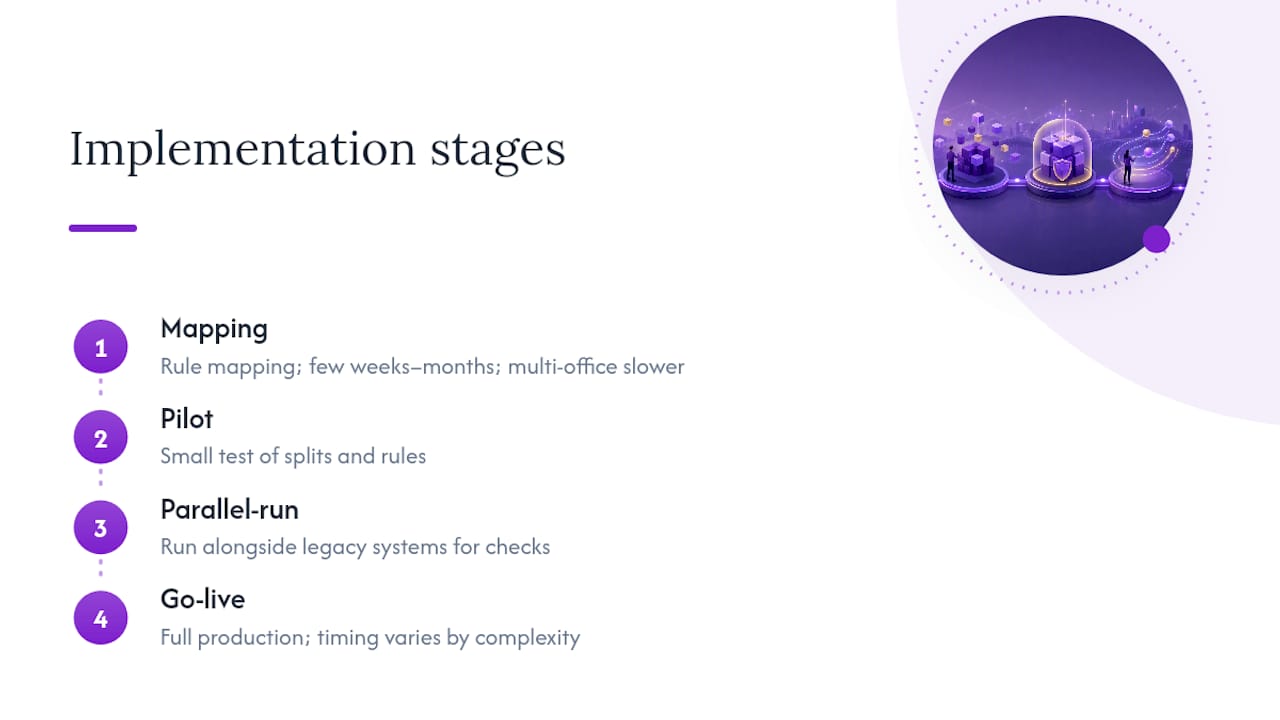
One-time costs typically cover system integration, rule mapping for your specific split logic, and staff training on the approval workflow. Recurring costs are usually a monthly subscription based on agent count, plus standard ACH transfer fees, both far smaller than the cost of correcting a single misapplied deduction order across dozens of deals.
The real savings show up quietly: fewer manual correction cycles, less agent turnover tied to payment errors, and reconciliation that takes hours instead of days. When evaluating a vendor, ask directly about SLA commitments and how disputed payments are paused and tracked, not just how fast the software processes a batch.
RESPA Compliance Checklist Before You Run a Bulk Payout
Run this checklist against every batch before approval, not just during quarterly reviews.
- Confirm every payment reflects bona fide services performed or a legitimate broker split, consistent with RESPA Section 8© principles.
- Verify no payment in the batch is structured to reward a referral of settlement business, which Section 8(a) and (b) prohibit outright.
- Confirm remittance statements, approval logs, and audit records are stored and retrievable for the full five-year retention window.
- For any marketing services agreement or similar arrangement, document the actual services performed and their market value, since CFPB guidance treats undocumented MSAs as a red flag for disguised referral payments.
- Route any disputed or unclear transaction into a paused exception queue instead of letting it ride through with the rest of the batch.
How BrokerPay Handles These Requirements in Practice
BrokerPay was built specifically to replace the Venmo-and-spreadsheet patchwork that creates most of the risk described above. The platform’s split engine tracks graduated commissions, caps, and referral deductions in a fixed order, pairs every batch ACH transfer with a remittance statement, and requires approval signoff before funds move.
That structure maps directly onto the checklist:
- Rule-based splits and cap tracking replace manual spreadsheet math
- Approval workflows create the internal control regulators expect
- Immutable audit logs satisfy the five-year retention standard under Regulation X
- Batch ACH replaces P2P transfers that leave no usable payment record
For teams mapping their own split scenarios, BrokerPay’s compliant co-op payment workflow examples walk through eight real configurations brokerages actually use.
Build In-House or Buy a Compliance Platform?

Building your own commission engine only makes sense if you have engineering staff who can maintain it as RESPA guidance evolves, and most independent brokerages don’t have that bandwidth to spare. The math rarely works out: a few months of developer time plus ongoing maintenance almost always costs more than a subscription, and it puts compliance updates on your internal roadmap instead of a vendor’s.
Compliance-first SaaS wins for most brokerages because the platform absorbs regulatory updates for you. The smartest hybrid I’ve seen pairs an existing accounting system with a dedicated payout engine, letting each tool do the one job it’s actually built for.
— Wes
Get Started With Automated, Audit-Ready Commission Payouts
A compliant platform replaces the Venmo, Zelle, and spreadsheet workarounds that leave brokerages exposed to RESPA liability with a payout system built around split accuracy, approval workflows, and permanent audit records. Every batch produces its own remittance statement, so agents and brokers see the same math without a manual reconciliation step.
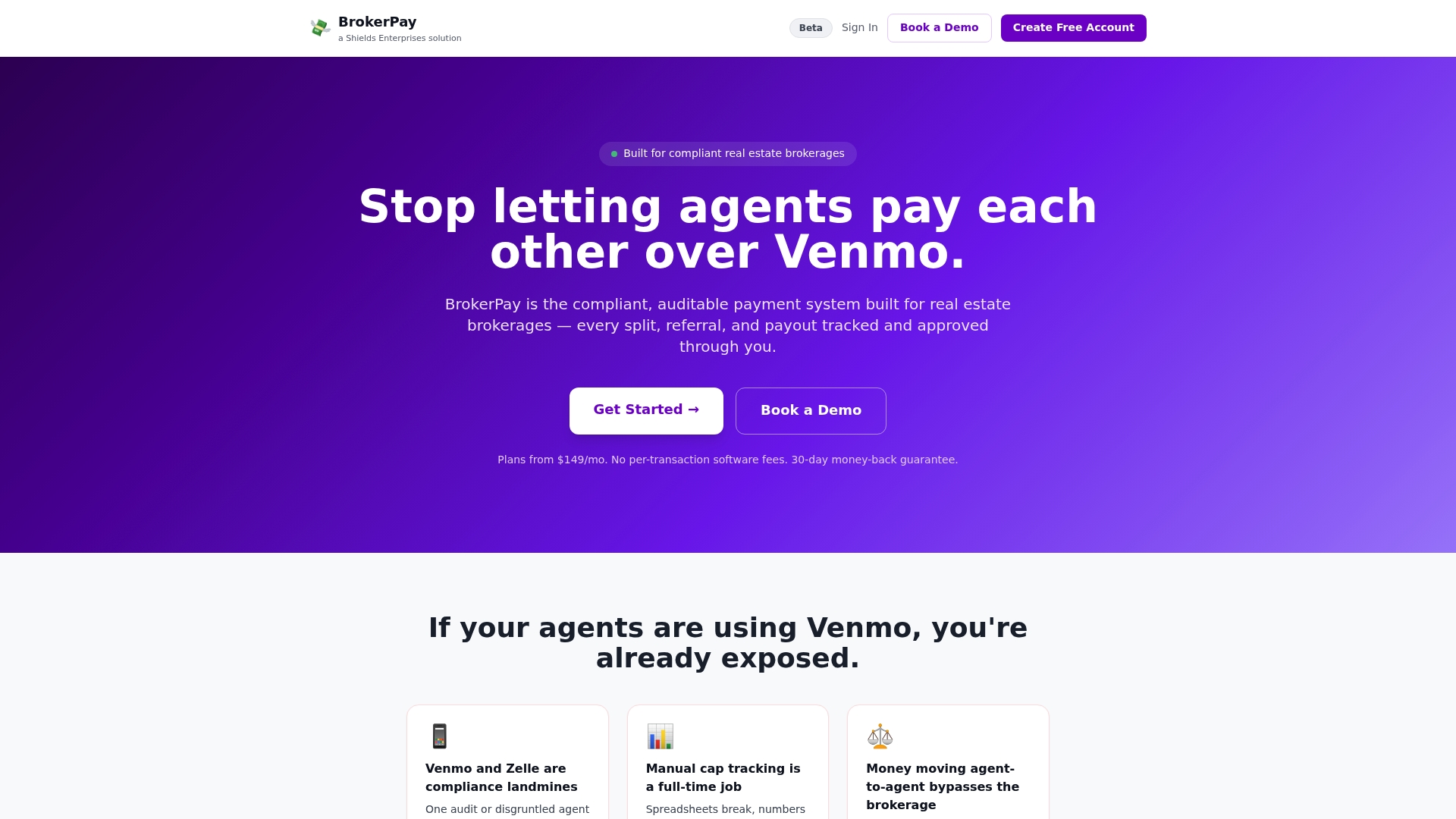
If your brokerage is still moving commission money by hand, or through apps never meant for business transactions, that’s the exact gap BrokerPay closes. Review the switch from manual to automated payouts guide for a realistic rollout timeline, then visit the BrokerPay platform to request a demo and see how a sample remittance statement looks for your split structure.
Primary Sources and Further Reading
- CFPB – Regulation X (RESPA) § 1024.14
- 12 CFR § 1024.14 — Prohibition against kickbacks and unearned fees
- RESPA frequently asked questions | Consumer Financial Protection Bureau
- BrokerPay: Commission payment alternatives
Sources
- CFPB – Regulation X (RESPA) § 1024.14
- RESPA frequently asked questions | Consumer Financial Protection Bureau
- 12 CFR § 1024.14 — Prohibition against kickbacks and unearned fees
- Real Estate Commission Tracking Automation for Brokerages | Neudash
FAQ
Is It Legal to Split Commissions Between Brokerages?
Yes, cooperative brokerage arrangements are protected under RESPA Section 8© as long as the payment reflects services actually performed rather than a disguised referral fee.
How Long Must Brokerages Keep Commission Payout Records?
Regulation X requires retaining payout documentation, including remittance statements and approval logs, for five years.
Why Shouldn’t Brokerages Use Venmo or Zelle for Agent Splits?
P2P apps aren’t built for business transactions and typically can’t be paused or reversed once sent, leaving no reliable audit trail and creating real compliance exposure.
What Should a Remittance Statement Include?
It should show the gross commission, every deduction in the documented order (referral fees, franchise fees, cap contributions), and the final net amount paid to the agent.
Can Software Like BrokerPay Handle Graduated Splits and Caps Automatically?
Yes, a rule-based split engine like BrokerPay’s applies graduated tiers, cap tracking, and deduction order automatically, removing the manual math errors common in spreadsheet workflows.