After $418M NAR Settlement, U.S. Brokerages’ Commission Playbook

Real estate commissions did not vanish or collapse after the NAR settlement. What changed is the paperwork: agents now need signed, written buyer-broker agreements with a stated fee before touring homes, MLS systems can no longer publish offers of compensation, and any gap between what a buyer agreed to pay and what the seller offers can fall on the buyer. Brokerages that haven’t rebuilt their contracts and payment systems around this are exposed.
TL;DR:
- Buyer-agent commissions remain stable at around 2.43% in Q2 2025, despite predictions that settlement rules would lower rates significantly.
- Brokerages must now have signed, written buyer-broker agreements with clear compensation terms before showing properties and negotiate any fee gaps explicitly.
- Payment approval and documentation workflows are essential, with firms encouraged to use ACH-based payouts that generate audit trails instead of peer-to-peer transfers.
- Evidence such as signed contracts, timestamped communication, and detailed logs play a decisive role in resolving commission disputes under new rules.
- Failure to rebuild operational systems around these compliance standards exposes brokerages to legal risks and potential disputes that can be avoided with proper processes.
Table of Contents
- What The Settlement Changed: Rules, Coverage, And Current Legal Status
- How Commissions Actually Look Now: What The Data Shows
- Practical Steps Brokerages Must Take Now
- Procuring Cause Disputes: What Evidence Actually Wins
- Negotiating Buyer-Broker Agreements: Four Lines That Matter Most
- Why Documentation And Payment Discipline Are The Real Guardrails
- How BrokerPay Handles Commission Payments The Compliant Way
- Sources
What The Settlement Changed: Rules, Coverage, And Current Legal Status
The rule changes settled two years of litigation, but the mechanics matter more than the headlines. Under the terms, buyer’s agents must sign a written agreement with their client before showing a single property, and that agreement must state compensation as a flat fee, a percentage, or an hourly rate rather than an open-ended figure. Compensation has to be objectively ascertainable, meaning a buyer can look at the contract and know exactly what they owe. MLS systems nationwide dropped cooperative compensation fields entirely, so sellers now negotiate buyer-agent pay directly, off the MLS.
The core provisions:
- Written buyer representation agreements required before touring
- Compensation stated in fixed terms, never left open-ended
- No compensation offers published in MLS listing data
- A conspicuous disclosure that commissions are negotiable and not fixed by law
NAR paid $418 million and agreed to the practice changes as part of the resolution. The Eighth Circuit affirmed the settlement approval in 2026, closing off most avenues for further appeal and locking these rules in as the operating baseline for brokerages nationwide.
How Commissions Actually Look Now: What The Data Shows
The predicted “race to the bottom” hasn’t shown up in the numbers. Redfin data reported by HousingWire put the average buyer’s agent commission at 2.43% in Q2 2025, up slightly from 2.38% a year earlier.
Statistic callout: Buyer-agent commissions rose from 2.38% to 2.43% year over year in Q2 2025, according to Redfin, despite predictions the settlement would drive rates sharply lower.
A few things explain why:
- Buyers in competitive markets often need agent representation just as badly as before, so they’re willing to pay for it
- Sellers still recognize that covering some buyer-agent compensation widens their pool of qualified buyers
- Local market heat, price tier, and inventory levels swing negotiated rates more than the settlement itself does
For agents, the practical takeaway is that compensation is now a conversation you have explicitly, in writing, every single time — see For Agents | HomePilot for tools and resources to streamline these buyer-broker agreement workflows. It’s not lower by default. It’s just visible and negotiated instead of assumed.
Practical Steps Brokerages Must Take Now
Rebuilding your operations around the new rules isn’t optional, and it’s not a one-time fix. Every transaction now needs to pass through contract review, payment approval, and documentation checkpoints that didn’t exist two years ago.
- Standardize buyer-broker agreement review. Every agreement should include a conspicuous compensation disclosure before it reaches signature, no exceptions.
- Build internal approval workflows. Splits, referral fees, and co-op commissions need a documented sign-off step, not a verbal nod between agents.
- Kill peer-to-peer payment habits. Venmo and Zelle transfers between agents leave no audit trail and create direct RESPA compliance exposure.
- Train agents on contemporaneous documentation. Showings, negotiations, and client communications should be logged the day they happen, not reconstructed later from memory.
Pro Tip: Set a policy that no commission gets paid without an approval record attached to the transaction file. If a dispute lands in arbitration a year later, that record is often the difference between winning and settling.
A real estate payment gateway built for ACH transfers, rather than a consumer payment app, gives brokerages the audit trail that agent-to-agent Venmo transfers simply can’t produce.

Procuring Cause Disputes: What Evidence Actually Wins
Procuring cause determines which agent earned the commission when more than one touched a transaction, and it has become the flashpoint for post-settlement disputes. Courts and arbitrators don’t weigh who talked to the buyer first. They weigh who did the work that directly led to the sale, and they want proof.
Legal analysis from Saiber points to a consistent pattern: cases turn on contemporaneous records, not testimony reconstructed after the fact. The evidence that actually decides these disputes includes:
- Signed buyer-broker agreements with clear compensation terms
- Timestamped emails and text threads showing who initiated contact and negotiated terms
- Showing logs tied to specific dates and properties
- MLS history documenting listing and offer activity
Brokerages that win these disputes usually did three things before the dispute ever started: wrote explicit contract clauses defining scope, logged activity as it happened, and tried to resolve disagreements directly before anyone filed a claim. Waiting until a dispute escalates to start pulling records together is a losing strategy almost every time.
Negotiating Buyer-Broker Agreements: Four Lines That Matter Most
Every buyer-broker agreement now hinges on four negotiable terms, and getting them wrong is how buyers end up with surprise bills. According to Redline’s breakdown of post-settlement agreements, these are the lines worth reading twice before signing:
- Compensation formula — flat fee, percentage, or hourly, stated as a specific number
- Exclusivity term — how long the buyer is bound to that agent
- Property scope — which listings or areas the agreement covers
- Seller-pays gap — what happens if the seller offers less than the agreed fee
That fourth line is where buyers get burned. If a buyer agreed to pay their agent 3% and the seller only offers 2%, the buyer can owe the difference out of pocket. Three contract structures handle this differently:
- Zero-gap: the buyer owes nothing beyond what the seller offers; the agent absorbs any shortfall
- Capped-gap: the buyer’s exposure is limited to a set dollar amount, even if the shortfall is larger
- Broker-absorbed: the brokerage covers the difference internally rather than passing it to either party
Buyers with strong leverage, cash offers, competitive markets, higher price points, generally have more room to negotiate a zero-gap or capped-gap clause. Agents should present all three options plainly rather than defaulting to whichever protects their own commission most.
Why Documentation And Payment Discipline Are The Real Guardrails
The settlement didn’t just change contracts. It changed what “proof” means in a commission dispute, and most brokerages are still catching up. Contract clarity matters, but it only holds up if the paper trail behind it is just as clean, showing logs, approval records, payment confirmations, all timestamped and tied to a specific transaction.

That’s the piece brokerages consistently underinvest in. Everyone updates their buyer agreement templates. Fewer rebuild the payment side of the business, which is exactly where RESPA exposure and procuring-cause weaknesses tend to hide. A commission split paid through a personal Venmo transfer with no approval record attached is a liability sitting in plain sight, waiting for the wrong dispute to surface it.
Priorities from here should be contract clarity first, audit-ready workflows second, and agent training on contemporaneous documentation third. Get those three right and most disputes never make it to arbitration in the first place.
— Wes
How BrokerPay Handles Commission Payments The Compliant Way
Everything above points to the same operational gap: brokerages need payment systems that produce evidence, not just move money. BrokerPay automates agent splits, referral fees, and co-op commissions with built-in approval workflows, so every payout has a documented sign-off before funds move.
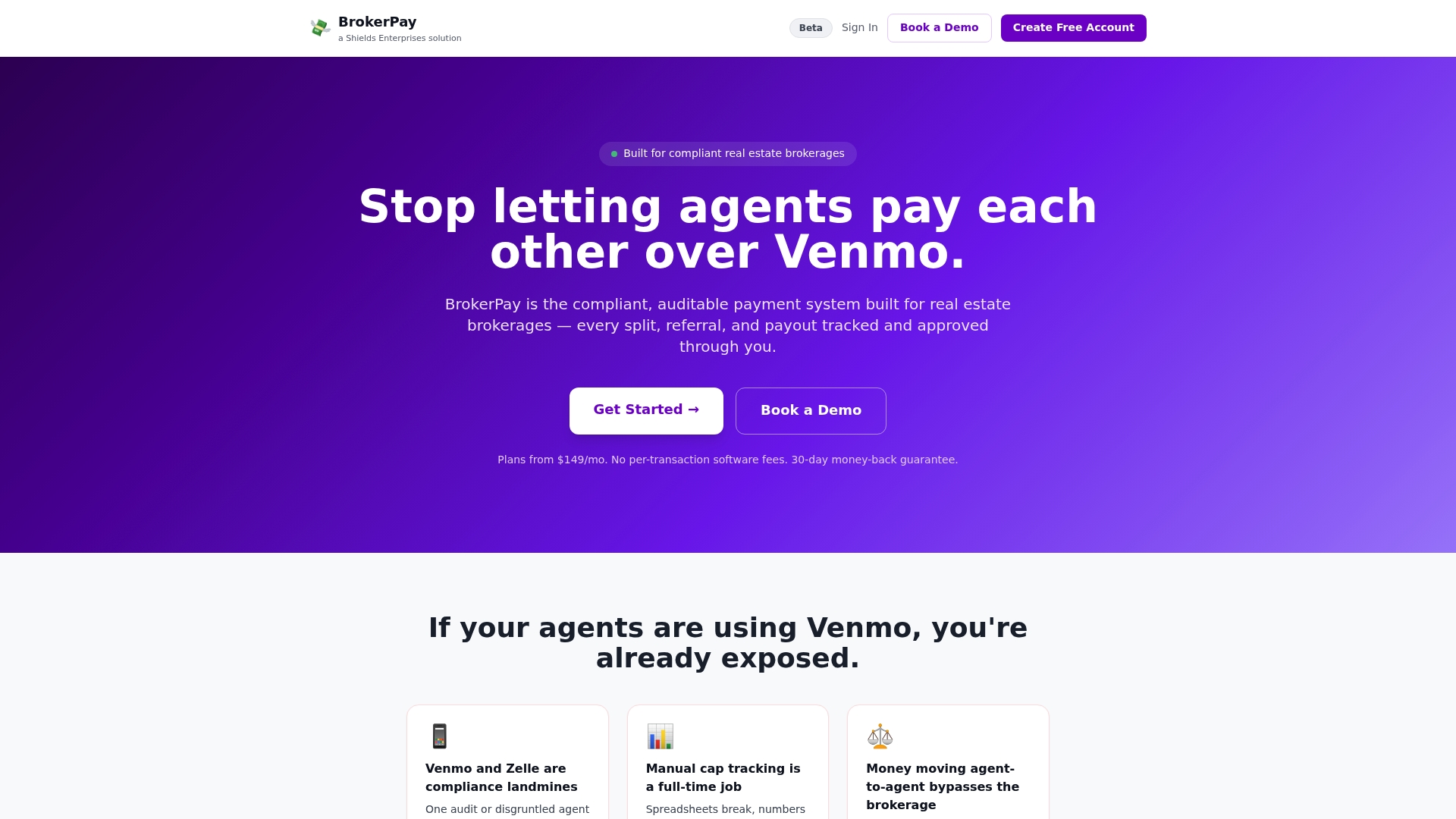
That matters directly for the disputes and RESPA exposure covered in this article. Instead of a Venmo transfer with no paper trail, BrokerPay generates an audit-ready record tied to the transaction, exactly the kind of contemporaneous documentation that decides procuring-cause cases. It replaces manual spreadsheets and P2P payment workarounds with ACH-based payouts that document who approved what and when. For brokerages weighing whether to keep patching together manual processes or move to automated payouts, the compliance risk alone usually settles the question. Visit Brokerpay to see how the platform tracks splits and referral fees for your brokerage.
Sources
- NAR settlement: what real estate practitioners need to know | Liskow & Lewis
- A year after the NAR settlement, agent commissions are up | HousingWire (reporting Redfin data)
- Sitzer settlement affirmed; NAR practices reshaped | Inman
- Commission disputes and procuring cause litigation: legal considerations | Saiber