Commission Holdback Real Estate: A Compliance Guide for Brokerages

A commission holdback in real estate is an amount a brokerage withholds from an agent’s gross commission, pending verification, reconciliation, or a triggering condition, covering splits, referral fees, co-op payments, chargebacks, and cap-tracking adjustments. The immediate action: replace any informal payment process with a RESPA-aware SaaS platform that provides immutable audit trails and ACH settlement. CFPB oversight under Regulation X and RESPA makes undocumented or peer-to-peer holdback payments a federal liability risk. Brokerpay is built specifically for this problem.
Key scenarios where withheld commissions arise:
- Referral or co-op fees held pending closing confirmation and market-value verification
- Chargebacks triggered by financing failures, title issues, or buyer defaults
- Cap-progress adjustments where company-dollar splits shift mid-year
- Marketing or co-op escrow offsets awaiting settlement reconciliation
Key Takeaways
A compliant commission holdback program requires written policy, governed SaaS workflows, and ACH settlement, not informal P2P payments that leave no audit trail.
| Point | Details |
|---|---|
| Stop P2P immediately | Venmo and Zelle create RESPA exposure, commingling risk, and 1099 reconciliation gaps that cannot be fixed retroactively. |
| Written policy first | Update agent agreements to define holdback triggers, approval matrix, and release timelines before configuring any system. |
| Require SOC 2 and ACH evidence | During vendor evaluation, request a SOC 2 report, sample audit trail export, and bank ACH clearing records. |
| Three-way reconciliation monthly | Match the transaction system, GL, and bank every month to catch errors before a regulator does. |
| Brokerpay as recommended platform | Brokerpay provides immutable logs, ACH settlement, cap tracking, and RESPA-aware workflows built for U.S. brokerages. |
Table of Contents
- What creates a commission holdback in real estate?
- RESPA, CFPB, and state rules you must understand
- Why Venmo and Zelle create serious exposure
- What a compliant commission-holdback SaaS must provide
- How to implement a holdback system step by step
- Internal controls and governance that keep you audit-ready
- How to assess pricing and ROI for holdback automation
- Brokerpay handles commission holdback compliance for U.S. brokerages
- The part most brokerages learn too late
- Primary sources and official guidance
- Sources
What creates a commission holdback in real estate?
Withheld agent commissions are not edge cases. They appear in nearly every active brokerage’s workflow, often without a formal name attached to them.
Consider two common timelines. In the first, a buyer’s agent earns a referral fee from an out-of-state brokerage. The co-op amount sits in a holdback until the deal closes, the referring brokerage confirms the relationship in writing, and the paying brokerage documents that the fee reflects fair market value for the referral. In the second, an agent hits their annual cap in October. The brokerage withholds company-dollar splits from November closings until year-end reconciliation confirms the cap calculation is correct, then releases the balance.
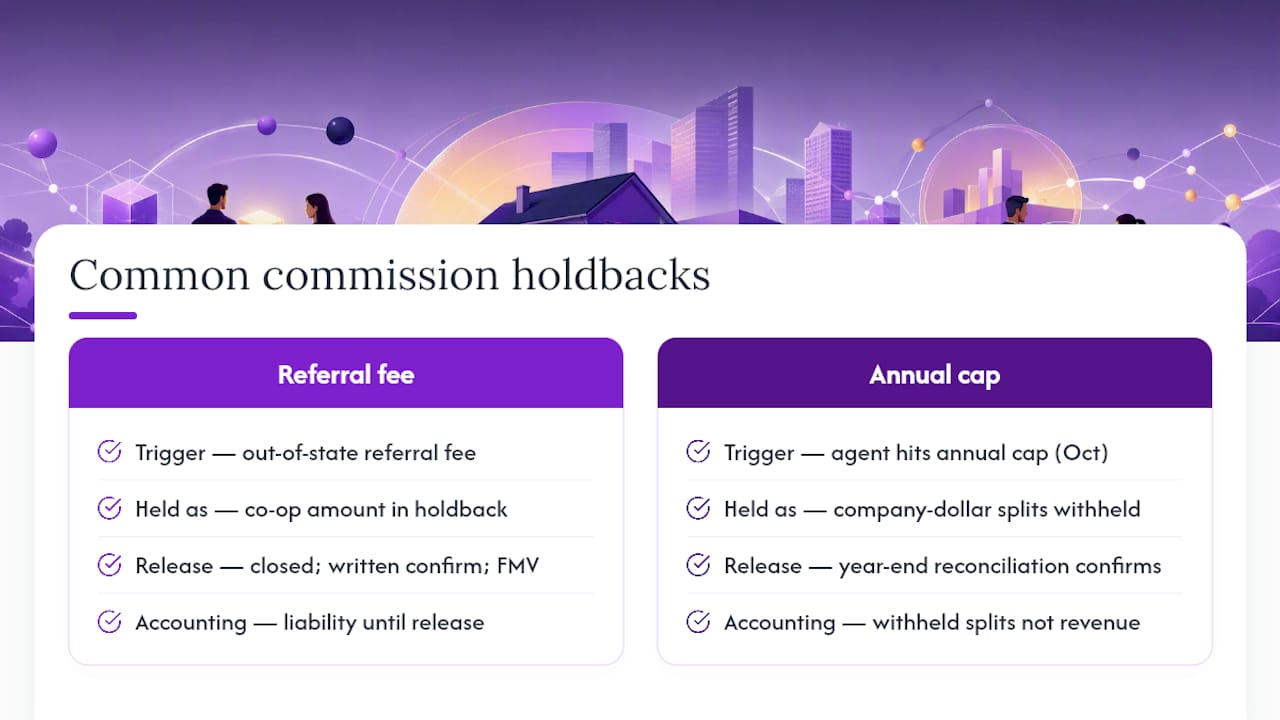
Accounting treatment matters here. Withheld amounts generally sit as a liability on the brokerage’s books until the release condition is met, not as recognized revenue. Booking them as income prematurely, or paying splits directly from a trust account, are common brokerage bookkeeping errors that invite state discipline. Three-way reconciliation, matching the transaction system, the general ledger, and the bank, is the standard that auditors expect.
RESPA, CFPB, and state rules you must understand
Improperly structured commission payments or marketing service agreements (MSAs) carry real federal exposure. RESPA Section 8 prohibits giving or receiving anything of value for referrals of settlement service business. The definition of “thing of value” is deliberately broad: cash, credits, reduced fees, and even office space can qualify.
The bona fide services exception is where most brokerages get into trouble. An MSA between a brokerage and a title company is legal only if the title company actually performs services and the payment reflects market value. Regulatory guidance is explicit: payments that split charges for no actual services, or that exceed what the market would pay for those services, violate Section 8(b). A brokerage that routes a lender’s marketing payment through an agent’s commission disbursement has likely created exactly that structure.
Florida Realtors guidance recommends a concrete test: document what comparable providers charge for the same service and confirm the MSA payment falls within that range. Florida also requires all compensation to flow through the registered broker, not directly to a sales associate from a principal or settlement-service provider.
Procurement red flags to watch for:
- Payments from a title company or lender routed directly to an individual agent
- MSAs with no market-value documentation or benchmarking
- Referral fees paid outside the brokerage’s own disbursement system
- Verbal or undocumented holdback release conditions
Why Venmo and Zelle create serious exposure
P2P apps are not payment infrastructure. They are consumer money-transfer tools with no state licensing, no trust-account segregation, and no ACH trace records a regulator can audit. Using Venmo or Zelle to pay a withheld referral fee or co-op split creates a gap that is nearly impossible to close retroactively.
The specific risks:
- No immutable transaction log tied to a deal ID or CDA
- Commingling of personal and brokerage funds in the same app account
- No bank clearing record for 1099-NEC reconciliation
- Inability to produce a timestamped approval trail for a RESPA audit
- State licensing boards treat undocumented commission payments as potential trust-account violations
The IRS requires brokerages to issue Form 1099-NEC to licensed agents classified as statutory nonemployees, and the records must reconcile each payment to a specific transaction. A Venmo payment with a memo field of “closing” does not meet that standard.
Pro Tip: Stop P2P payments immediately by routing all holdback releases through a single brokerage bank account with a written approval step. Even a manual spreadsheet log with email approvals is better than Venmo while you evaluate SaaS options. The goal is a traceable, timestamped record for every dollar released. For a faster path, see how compliant co-op payment workflows can replace informal processes within days.
What a compliant commission-holdback SaaS must provide
The vendor must prove two things before anything else: an immutable audit trail and RESPA-aware approval workflows. Everything else is secondary.
Required features for your RFP:
- Immutable transaction logs tied to deal IDs and CDAs
- Role-based approval workflows with timestamped entries
- ACH settlement with bank clearing records (not P2P rails)
- Split, referral, and co-op tracking with configurable rules
- Cap-progress tracking and automatic recalculation
- Chargeback handling with reversal documentation
- Configurable holdback rules per agent agreement type
- Records retention and export suitable for state and federal audits
- SOC 2 certification and documented data security controls
Vendor capability questions to ask during evaluation:
- Which accounting systems and CRMs does the platform integrate with natively?
- What is the SLA for ACH settlement, and which bank relationships support it?
- Does the platform provide policy templates and agent agreement language?
- What onboarding and training support is included in the subscription?
During an RFP, request a SOC 2 report, a sample audit trail export, bank ACH evidence, and references from brokerages of comparable size. Understanding how a real estate payment gateway connects to bank rails is worth a dedicated conversation with any vendor’s technical team. Also review how commission structures map to split configurations before finalizing your configuration requirements.
How to implement a holdback system step by step
Adopt a written policy, update agent agreements, configure SaaS rules, then pilot before full rollout. That sequence is not optional. Skipping the policy step means agents dispute releases; skipping the pilot means configuration errors hit live transactions.
Implementation checklist:
- Assign a compliance lead and a finance lead as joint owners of the holdback program
- Draft a written holdback policy covering: Purpose, Scope, Holdback triggers, Approval matrix, Retention and audit, Agent notice language
- Update agent independent-contractor agreements to specify holdback conditions and release timelines
- Obtain a signed Commission Disbursement Authorization (CDA) before every closing, and keep signed CDAs in digital files as the primary release trigger
- Configure SaaS holdback rules to match each agent agreement type
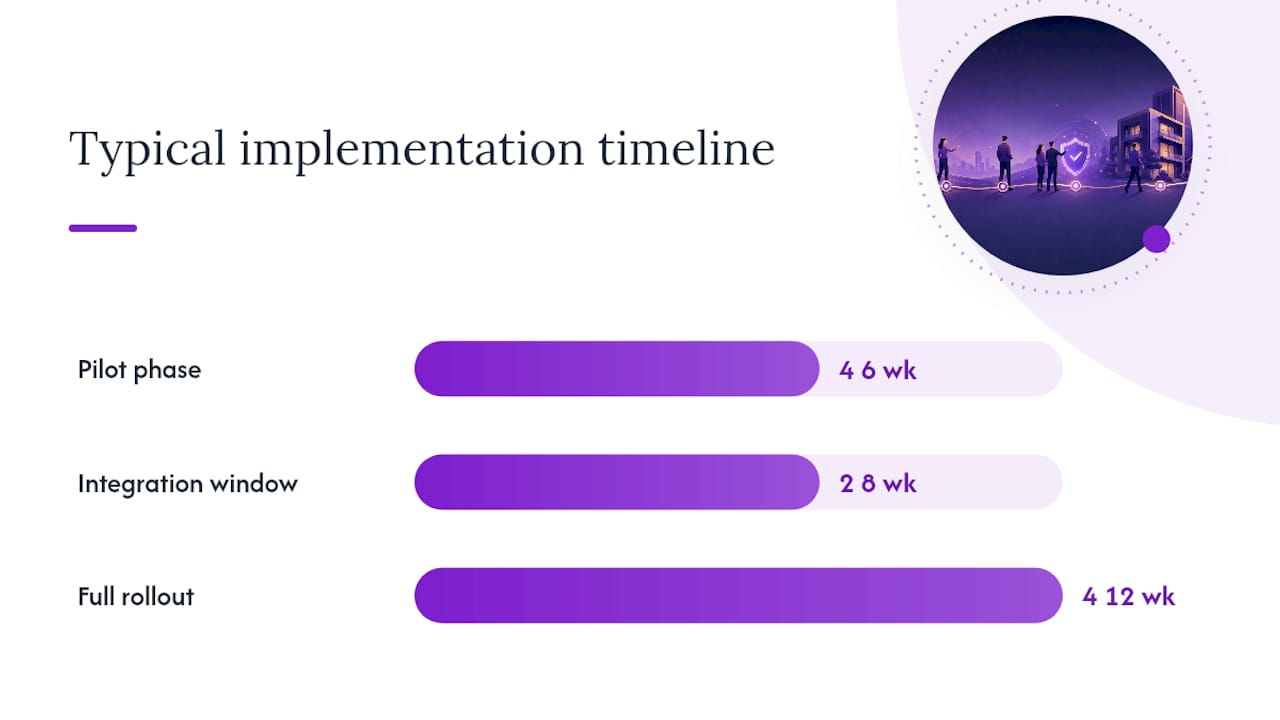
- Pilot with 10–20 agents across 4–6 weeks, reconciling every release manually against the GL
- Complete accounting and CRM integrations (allow 2–8 weeks depending on system complexity)
- Full rollout with a documented go-live plan and audit schedule
Sample holdback-to-release workflow:
- CDA and commission instruction captured at contract execution
- Holdback amount calculated and logged with deal ID, agent ID, and trigger condition
- Compliance or finance approver reviews and timestamps the approval in the system
- ACH settlement initiated; bank clearing record attached to the transaction log
- Accounting entry posted; payment tagged for 1099-NEC reconciliation
- Agent notified of release with a timestamped disbursement record
Typical timeline: pilot phase runs 4–6 weeks, integration window 2–8 weeks, full rollout 4–12 weeks depending on the number of integrations and agent count.
Internal controls and governance that keep you audit-ready
Recurring controls reduce RESPA risk and state discipline exposure far more reliably than a one-time policy update. The controls that matter most:
- Monthly reconciliation of all holdback balances against the GL and bank (three-way)
- Sample testing of MSAs quarterly: pull three to five agreements and confirm market-value documentation exists
- Review of all third-party payments to agents for RESPA compliance before release
- Annual agent and staff training on payment policies, with attendance records retained
- Documented escalation path for disputed commissions, including a written playbook
Record retention: keep signed CDAs, holdback logs, MSA documentation, and ACH clearing records for the period required by your state regulator, with a floor of five years for federal RESPA purposes.
Pro Tip: When auditors review a holdback program, the first thing they request is the approval trail for the five largest releases in the prior year. If your system cannot produce a timestamped, role-attributed log for each of those in under ten minutes, you have a documentation gap. Good commission tracking practices make that request a non-event.
How to assess pricing and ROI for holdback automation
Quantify costs by agent count, integration effort, and the compliance risk you are mitigating. The subscription cost is almost never the largest line item in a realistic TCO analysis.
Cost factors to model:
- Monthly subscription tier based on agent count (no per-transaction software fees with flat-rate SaaS)
- One-time onboarding and integration services
- ACH transaction fees from the banking partner
- Staff time saved on AP reconciliation and manual holdback tracking
- Reduction in chargeback losses from better documentation
- Audit cost avoidance: a single RESPA enforcement action or state license investigation costs far more than a year of SaaS fees
A realistic break-even example: if a brokerage’s finance team spends eight hours per month manually reconciling holdback releases at a fully loaded cost of $75 per hour, that is $7,200 per year in labor alone, before any compliance incident. A flat-rate SaaS subscription covering that workflow typically pays for itself within the first quarter.
Buyer questions for pricing negotiations: ask about agent-count pricing caps, which integrations are included versus billed separately, support SLA terms, and what migration assistance is provided for existing holdback records.
Brokerpay handles commission holdback compliance for U.S. brokerages
Brokerages that have been managing withheld commissions through spreadsheets, email chains, or P2P apps need a single governed system, not another workaround.
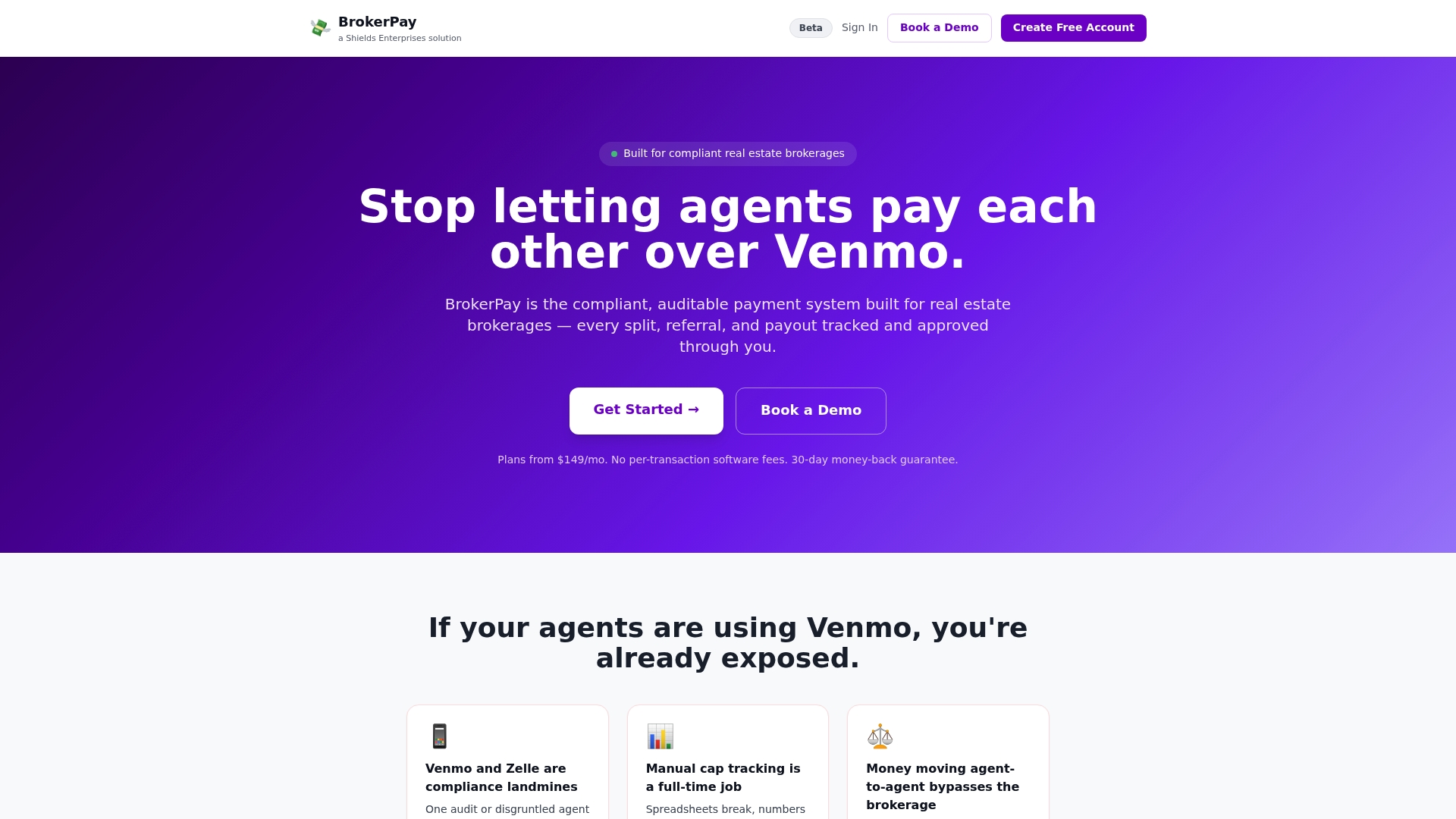
Brokerpay provides exactly the feature set the procurement checklist above describes: immutable transaction logs, role-based approval workflows, ACH settlement with bank clearing records, cap tracking, referral and co-op split management, and records retention built for RESPA and state regulatory audits. The platform is built for U.S. brokerages, not adapted from a generic payroll tool. Onboarding typically runs four to six weeks, with dedicated support through configuration and pilot. Agent agreement templates and policy language are included. Stop routing commission payments through Venmo and start your Brokerpay pilot today.
The part most brokerages learn too late
The hardest part of replacing P2P payments is not the technology. It is getting agents to trust a new system when they have been paid informally for years.
The brokerages that make this transition cleanly do one thing differently: they update agent agreements before they touch the software. When the holdback conditions, release timeline, and approval process are written into the independent-contractor agreement, agents stop treating a withheld amount as a dispute and start treating it as a scheduled payment. That shift in framing eliminates most of the friction.
Auditors are not looking for perfection. They are looking for evidence that someone was in charge of the process. A timestamped approval log, a signed CDA on file, and a reconciled bank record tell that story. A Venmo transaction history does not.
Primary sources and official guidance
The following sources back the regulatory and operational claims in this article:
- RESPA FAQs, CFPB: primary authority on “thing of value,” MSA structure, and bona fide services exception. Use for policy wording and RFP compliance criteria.
- Staying RESPA-compliant: referrals, Florida Realtors: market-value testing guidance for MSAs and the payment-through-broker rule. Use for state-level compliance language.
- Licensed real estate agents, IRS: statutory nonemployee classification and 1099-NEC reporting requirements. Use for tax classification and record-keeping policy.
- RESPA overview, NAR: Section 8 kickback prohibition and broker-to-agent payment examples. Use for agent training materials.
- Regulation excerpts on MSAs, CaseMine: regulatory language on services actually performed and market-value standards. Use for MSA documentation templates.
- Brokerpay: vendor reference for RESPA-compliant commission holdback automation, ACH settlement, and audit trail features.
This article is general information, not a substitute for advice from a qualified lawyer. Consult a qualified legal professional about your own circumstances before acting on anything here.
Sources
- Real Estate Settlement Procedures Act (RESPA) FAQs | Consumer Financial Protection Bureau
- Staying RESPA‑compliant: referrals | Florida Realtors
- Licensed real estate agents - Real estate tax tips | Internal Revenue Service
- Regulation excerpts on RESPA ‘thing of value’ and MSAs | CaseMine