Why Agent Payment Delays Cause Turnover in 2026

Agent payment delays are the leading operational cause of voluntary turnover in real estate brokerages. When agents close a deal and wait weeks for their commission split, the brokerage’s reliability becomes the issue, not the market. That erosion of trust compounds fast. Late payments cost the UK economy £11 billion annually and force thousands of business closures each year. The pattern holds across industries: when payment timing is unpredictable, people leave. Real estate managers who treat commission processing as a back-office afterthought pay for it in recruiting costs and lost production.
Why agent payment delays cause turnover in real estate
Payment delays cause turnover because they shift financial risk onto agents. A real estate agent operates as an independent contractor in most brokerage structures. Their income arrives in irregular bursts tied to closing dates, not a steady paycheck. When a brokerage adds processing delays on top of that natural irregularity, agents maintain a 90-day cash reserve just to manage their own cash flow. That reserve requirement is a direct tax on the agent’s working capital, and it signals that the brokerage cannot be counted on.

The industry term for this dynamic is commission payment reliability, and it sits at the center of agent retention strategy. Brokerages that treat payment timing as a compliance checkbox rather than a retention lever consistently see higher churn. The agents who leave first are rarely the weakest producers. They are the ones with enough volume to have options, which makes the loss disproportionately expensive.
Payment unpredictability also damages the psychological contract between agent and broker. An agent who closes three deals in a quarter and receives two payments on time and one two weeks late does not average out their frustration. They remember the late one. That asymmetry in how agents process payment experiences means a single delayed commission can undo months of goodwill.
What are the financial costs of payment-related agent turnover?
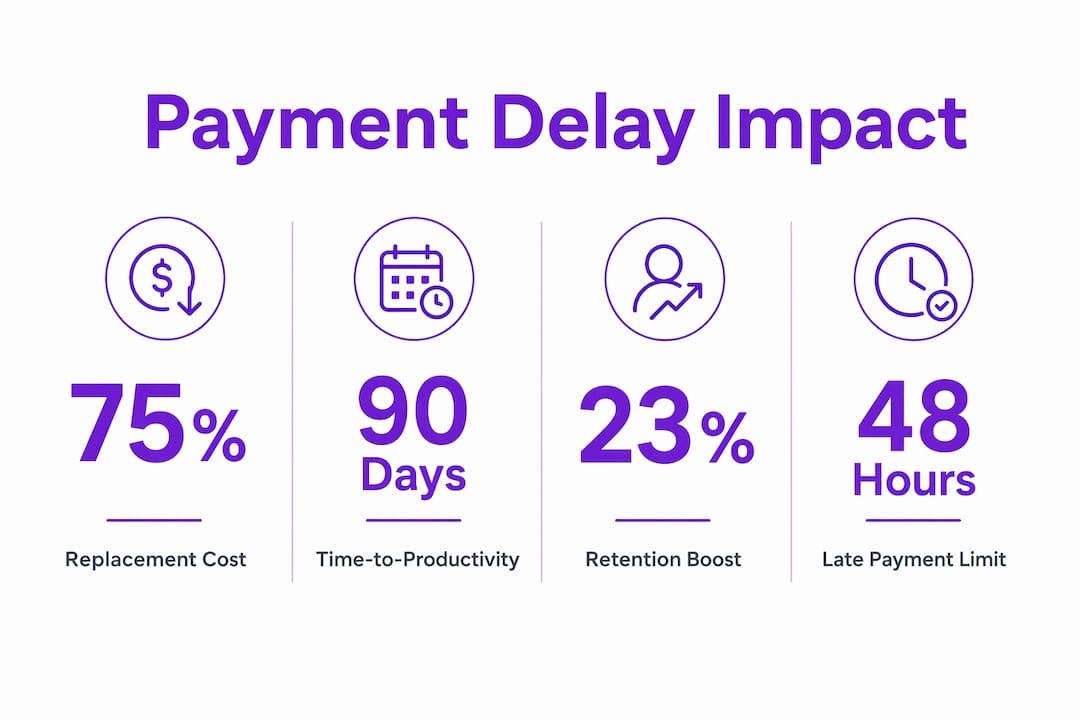
The financial impact of losing agents to payment issues is larger than most managers estimate. Replacing a lost producer costs between 75% and 150% of their salary in recruitment, onboarding, and lost production. For a mid-sized brokerage, three exits per year can cost $146,000 to $292,000. That figure does not include the deals that fall apart during the transition or the institutional knowledge that walks out the door.
The cost components break down across several categories:
- Recruitment advertising and recruiter fees: Posting on real estate job boards and paying referral bonuses adds up quickly.
- Onboarding and licensing verification: New agents require time from managers and compliance staff before they produce a single closed deal.
- Lost production during ramp-up: A new agent typically takes 60–90 days to reach full productivity, during which the brokerage absorbs the gap.
- Manager time diverted from revenue: Every exit interview, reference check, and training session pulls a manager away from active deals.
Pro Tip: Track the average time-to-productivity for new agents at your brokerage. If it exceeds 90 days, your true replacement cost is at the high end of the 75%–150% range, and payment reliability improvements will deliver measurable ROI faster than most recruiting initiatives.
The indirect cost that rarely appears in a spreadsheet is competitive intelligence loss. Agents who leave for another brokerage take their client relationships, referral networks, and market knowledge with them. When the departure is driven by payment frustration rather than a better commission split, it is entirely preventable.
How do payment delays affect agent behavior and trust?
Payment delays change how agents allocate their effort before they ever update their resume. Payment trust is a critical market-health input in two-sided platforms, and real estate brokerages function exactly as two-sided platforms connecting buyers, sellers, and agents. When payout clarity drops, agent participation drops with it. Agents begin hedging their bets by splitting their active listings across multiple brokerages or referring their best clients to contacts outside the firm.
“Lack of payout clarity and timing uncertainty leads to decreased repeat participation and more support tickets. Agents who cannot predict when they will be paid stop acting like partners and start acting like vendors shopping for a better contract.”
The behavioral shift is gradual and hard to detect until it accelerates. An agent who once brought every listing to the brokerage first starts testing alternatives. They do not announce this. The signal shows up in their production numbers three to four months later, by which point the relationship is already damaged.
Three specific behaviors precede a formal resignation:
- Reduced deal volume submitted to the brokerage: Agents route smaller or more complex deals elsewhere to avoid payment friction.
- Increased direct questions about payment status: Agents who ask repeatedly about commission timing are signaling anxiety, not curiosity.
- Disengagement from brokerage training and meetings: Agents mentally exiting the firm stop investing in its culture before they physically leave.
Compensation must be competitive to have any retention impact, but payment timing unpredictability independently stresses agents and drives turnover even when the commission split is fair. A brokerage paying a 70/30 split on a reliable schedule will retain agents longer than one paying 80/20 with chronic delays. The math on the split matters less than the certainty of the deposit.
What early warning signs indicate payment-related agent churn?
Brokerages can detect payment-driven churn months before a resignation letter arrives. Behavioral warning signs appear in payment data long before agents formally exit. The key is knowing which data points to monitor and acting on deviations quickly.
The most reliable early indicators, in order of predictive value:
- Late premium collections: An agent who begins delaying their own client follow-ups on pending deals is often managing their own cash flow stress caused by unpaid commissions.
- Manual remittance delays: When agents or their transaction coordinators start submitting paperwork late, it frequently reflects disengagement rather than disorganization.
- Unresolved reconciliation gaps: Disputes over split calculations that sit open for more than two weeks signal a breakdown in the payment relationship.
- Increased support contact about payment status: A spike in “where is my check” inquiries from a specific agent is a direct retention alert.
- Declining referral activity: Agents who stop sending internal referrals have mentally reduced their investment in the brokerage’s success.
Proactive brokerage management means analyzing payment data for deviation patterns like late remittance or manual pay exceptions as leading churn indicators. This is not a complex analytics project. A manager reviewing payment processing logs weekly can spot these patterns with a basic spreadsheet. The goal is to flag the deviation and address it in a direct conversation before the agent starts interviewing elsewhere.
Pro Tip: Set a standing rule: any commission payment that exceeds your stated processing window by more than 48 hours triggers a proactive call to the agent. Do not wait for them to ask. The call itself signals that the brokerage takes payment reliability seriously.
Predictive analytics can increase customer lifetime value by 23% and reduce agent attrition when applied to payment behavior data. That number reflects what becomes possible when brokerages stop treating payment processing as purely financial and start treating it as a retention signal.
How can brokerages reduce turnover caused by payment delays?
Fixing payment-driven turnover requires changes at the process level, not just the policy level. A written commitment to “timely payments” in an agent handbook means nothing if the back-office workflow still relies on manual spreadsheets and email approvals.
The most effective mitigation strategies, in order of implementation priority:
- Benchmark commission splits at or above market rates. If a brokerage lags by more than 10–15% below market compensation, no amount of payment reliability will offset the gap. Competitive pay is the floor, not the ceiling.
- Automate commission tracking and payout processing. Manual payment workflows create the reconciliation gaps and processing delays that agents experience as unreliability. Switching from manual to automated payouts eliminates the most common sources of delay.
- Publish a clear payout schedule and stick to it. Agents who know exactly when to expect payment stop monitoring their accounts anxiously. Predictability reduces stress even when the timeline is not immediate.
- Eliminate manual exceptions wherever possible. Repeated manual payout overrides and unclear status updates create operational fragility and compound trust loss. Standardized payout exception workflows prevent one-off fixes from becoming the norm.
- Use payment data as a retention dashboard. Review commission processing logs monthly to identify agents whose payment experience has degraded. Address gaps before they become grievances.
Brokerpay is built specifically for this problem. It tracks, documents, and processes agent splits, referral fees, and co-op commissions in a RESPA-compliant workflow. Brokerages using Brokerpay replace Venmo and Zelle workarounds with a documented payment system that gives agents visibility into their commission status at every stage. That visibility is what converts payment reliability from a promise into a verifiable fact.
Pro Tip: When rolling out a new payment system, send agents a one-page summary showing exactly how their commission moves from closing to deposit. Transparency about the process reduces anxiety even before the first payment clears.
Key Takeaways
Agent payment delays directly cause turnover by eroding trust, creating cash flow stress, and signaling operational unreliability, making payment timing a core retention strategy for every brokerage.
| Point | Details |
|---|---|
| Payment delays drive exits | Agents leave brokerages with chronic payment issues before they ever negotiate a better split elsewhere. |
| Replacement costs are steep | Losing one producer costs 75%–150% of their salary in recruitment, onboarding, and lost production. |
| Behavioral signals appear early | Late remittance, reconciliation disputes, and payment status inquiries precede resignations by months. |
| Automation closes the gap | Automated commission tracking eliminates the manual delays that agents experience as unreliability. |
| Predictability beats speed | Agents tolerate a longer payment window when the timeline is consistent and communicated clearly. |
What I’ve learned about payment reliability as a retention tool
The brokerages I’ve seen struggle most with retention share one trait: they treat payment processing as a finance function and agent relations as a separate HR function. Those two things are the same function. Every delayed commission is a message to the agent about how the brokerage values their contribution.
The data on replacement costs is sobering, but the more telling number is the one that never shows up in a report: the deals an unhappy agent does not bring to the brokerage. An agent who is quietly frustrated does not storm out. They just start routing their best opportunities elsewhere. By the time the production drop is visible, the relationship is already over.
What actually works is treating payment transparency as a communication strategy. Brokerages that proactively notify agents when a commission enters processing, clears compliance review, and hits their account see measurably better engagement. The payment itself has not changed. The experience of receiving it has. That distinction matters more than most managers expect.
The shift to compliant co-op payment workflows is not just a compliance upgrade. It is a retention upgrade. When agents can see exactly where their money is in the process, they stop worrying about it. And agents who are not worrying about their last commission check are focused on closing the next one.
— Wes
Brokerpay: built for brokerages that take payment reliability seriously
Payment delays are a solvable problem. Brokerages that still rely on manual splits, spreadsheet reconciliation, or peer-to-peer payment apps are creating the exact conditions that push their best agents out the door.
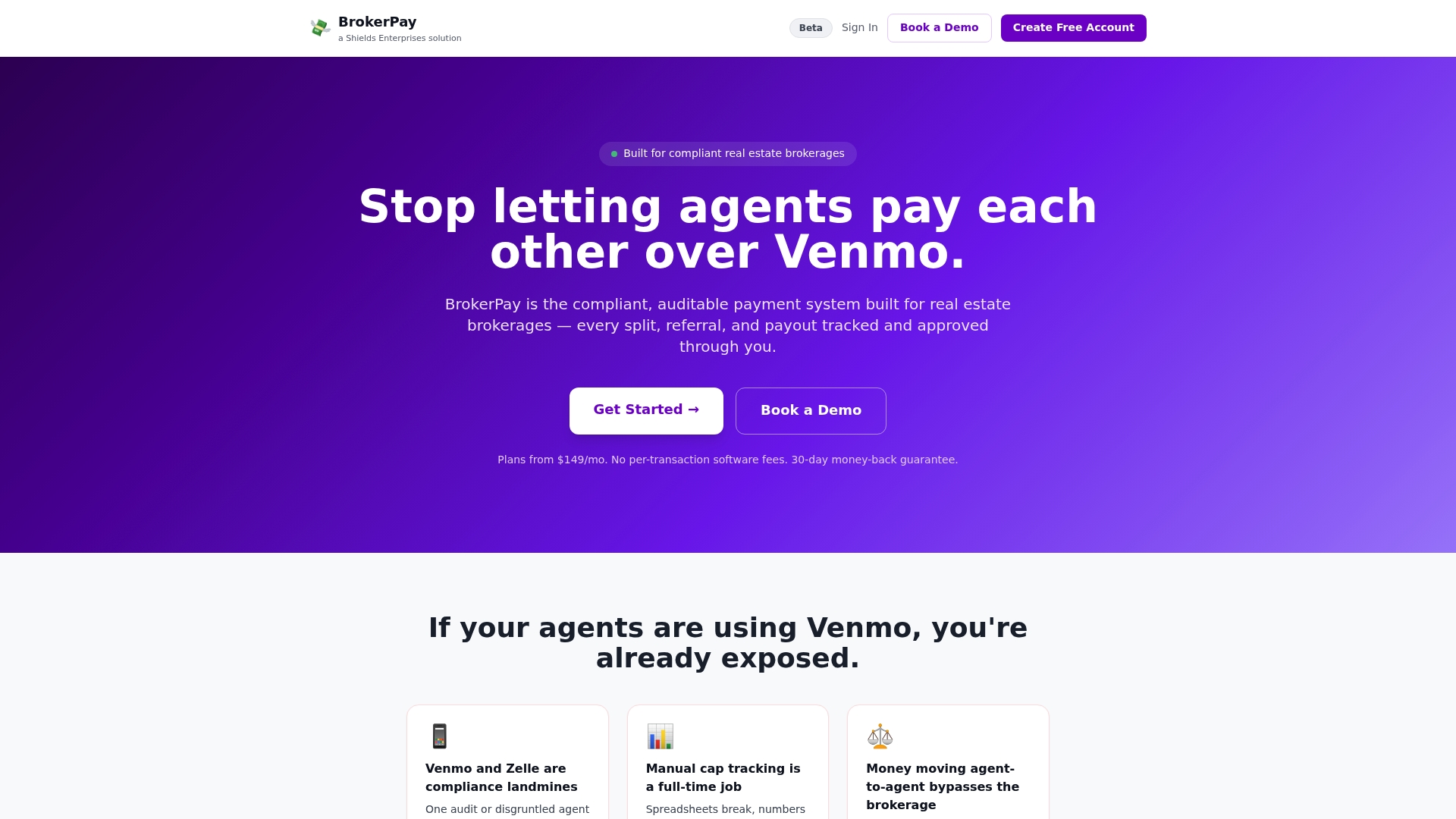
Brokerpay automates commission tracking, documents every split and referral fee, and processes payouts in a RESPA-compliant workflow. Agents get visibility into their payment status at every stage. Managers get a clean audit trail without the manual follow-up. The result is a payment experience that builds trust instead of eroding it. If payment-driven turnover is costing your brokerage more than you can measure, see how Brokerpay works and find out what reliable commission processing looks like in practice.
FAQ
Why do payment delays cause agent turnover?
Payment delays erode agent trust by shifting financial risk onto the agent and signaling operational unreliability. Agents with enough production volume to have options will move to a brokerage that pays on a predictable schedule.
How much does it cost to replace an agent who leaves over payment issues?
Replacing a lost producer costs 75%–150% of their salary, covering recruitment, onboarding, and the production gap during ramp-up. Three exits per year can cost a mid-sized brokerage $146,000 to $292,000.
What are the early warning signs of payment-related agent churn?
The clearest signals are late remittance submissions, repeated payment status inquiries, unresolved reconciliation disputes, and declining referral activity. These payment data warning signs typically appear months before a formal resignation.
Does automating commission payments actually improve agent retention?
Automation removes the manual processing delays that agents experience as unreliability. Predictive analytics and payment automation can reduce agent attrition and increase agent lifetime value when applied consistently to commission workflows.
Can a competitive commission split offset poor payment timing?
A competitive split is necessary but not sufficient. If a brokerage lags more than 10–15% below market rates, retention initiatives have limited effect. But even at market rates, unpredictable payment timing independently drives turnover by creating financial stress and loyalty erosion.