Why Real Estate Payment Platforms Reduce Risk

Real estate payment platforms reduce transaction risk by replacing vulnerable, email-based workflows with authenticated, auditable payment systems that protect closing funds from fraud and operational error. FBI IC3 data shows real estate fraud generated 12,368 complaints and $275.1 million in losses in 2025 alone. That number reflects a single, persistent vulnerability: unverified payment instructions traveling through insecure channels. Platforms like Brokerpay address this by centralizing payment controls, enforcing compliance with frameworks like ALTA best practices, and giving every transaction a documented, timestamped record that holds up under scrutiny.
Why real estate payment platforms reduce risk at the wire transfer level
Wire fraud is the most expensive single threat in real estate closings. The attack is simple: a criminal compromises an email account, intercepts wire instructions, and substitutes fraudulent banking details. Buyers, agents, and title companies then send funds to the wrong account. By the time anyone notices, the money is gone.
Email-only wire instruction workflows are the primary attack surface. Attackers do not need to break encryption. They only need access to one inbox. A single compromised email account can redirect hundreds of thousands of dollars in closing funds.
Portal-authenticated platforms eliminate this attack path. Instead of sending wire instructions by email, the platform delivers them through a secure, login-protected portal. The recipient must authenticate before viewing any banking details. That single control removes the most common fraud vector from the transaction entirely.

ALTA best practices require written wire procedures, multi-factor authentication, annual testing, and documented fraud response plans. These are not suggestions. Auditors look for timestamped verification records, segregation of duties, and proof that wire instructions were confirmed through independent channels. A platform that meets ALTA standards gives brokerages a defensible compliance posture.
A secure wire transfer workflow looks like this:
- The title company or closing agent uploads wire instructions to the platform portal.
- The receiving party receives a notification and logs in with multi-factor authentication to view the instructions.
- The platform records the timestamp, user identity, and IP address of every access event.
- Any change to wire details triggers a new verification step and a fresh notification to all authorized parties.
- Independent verification outside email confirms the instructions before funds move.
Pro Tip: Never confirm wire instruction changes by replying to an email thread. Call the title company directly using a phone number you looked up independently, not one provided in the email.
How audit trails reduce disputes and protect all parties
Comprehensive audit trails are the second major control that payment platforms provide. Every payment event gets recorded: the payer, the amount, the purpose, any fees, and any refunds. That record exists whether or not anyone disputes the transaction later.
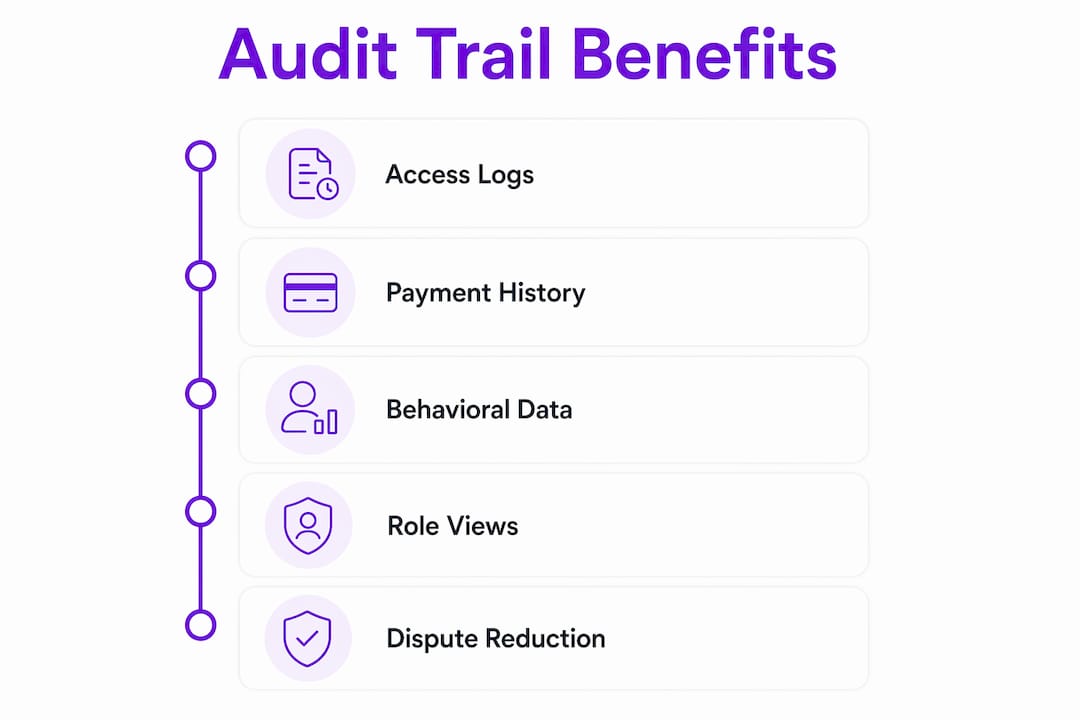
Payment platforms capture transaction histories and behavioral data inside the product itself. This gives brokerages stronger evidence for dispute resolution and fraud detection. A paper check or a Venmo transfer leaves no comparable record.
Different stakeholders see different views of the same payment data. An agent sees their commission split and payout status. A buyer sees their deposit confirmation. A title company sees the full closing funds picture. This tailored payment record access reduces confusion and eliminates the back-and-forth that causes most payment disputes.
The operational benefits extend beyond fraud prevention. Brokerages gain clear cash-flow visibility across all active transactions. Exceptions, such as a missing deposit or a delayed payout, surface immediately rather than at month-end reconciliation. That speed matters when a closing is on the line.
Key audit trail capabilities that reduce operational risk:
- Timestamped records for every payment action, including views, approvals, and modifications
- Role-based access controls that limit who can initiate, approve, or modify payment instructions
- Automated exception alerts that flag unusual activity before it becomes a problem
- Reconciliation exports that match platform records to bank statements without manual data entry
- Immutable logs that cannot be edited after the fact, making records defensible in disputes or audits
| Audit trail feature | Risk it addresses |
|---|---|
| Timestamped access logs | Proves who viewed or changed wire instructions and when |
| Role-based permissions | Prevents unauthorized users from initiating or modifying payments |
| Automated exception alerts | Catches anomalies before funds move incorrectly |
| Reconciliation exports | Eliminates manual matching errors that cause closing delays |
| Immutable transaction history | Provides defensible evidence in fraud investigations or legal disputes |
Does real-time payment tracking prevent closing delays?
Real-time payment tracking directly prevents the timing failures that kill deals. In a real estate closing, a missed or late payment can trigger a contract violation, force a closing extension, or cause a buyer to lose their earnest money deposit. These are not edge cases. They are predictable outcomes of manual payment processes with no live status visibility.
Automated payment infrastructure replaces guesswork with live status updates from payment initiation through final settlement. Every party knows exactly where funds are at every step. A title company does not need to call the lender to confirm a wire arrived. The platform shows it.
Consistent reconciliation across payment rails is equally important. A single closing may involve an ACH transfer for the earnest deposit, a wire for closing funds, and a separate ACH for commission splits. Manual processes treat each of these differently. A platform applies the same reconciliation logic to all of them. That consistency reduces errors and speeds up the post-closing accounting process.
End-to-end orchestration across payment rails with consistent exception handling lowers the risk of delays and legal exposure. When every payment type flows through the same system, the audit trail is complete and the reconciliation is automatic.
Pro Tip: Before selecting a payment platform, confirm it supports both ACH and wire transfers natively. Platforms that require manual workarounds for one rail introduce the same timing risks you are trying to eliminate.
How automation cuts fraud losses and human error in real estate operations
Manual payment processes are expensive and fraud-prone. Typical organizations lose approximately 5% of revenue to fraud, with a median loss of $145,000 per case. That figure reflects what happens when payment approvals depend on email threads, spreadsheets, and manual check runs rather than controlled, automated workflows.
Paper checks cost $2–$4 each to process. ACH transfers cost approximately $0.40. That cost difference compounds across hundreds of transactions per year. More importantly, paper checks create physical fraud exposure: check washing, forged signatures, and mail theft are all active threats in real estate operations.
| Payment method | Cost per transaction | Primary fraud risk |
|---|---|---|
| Paper check | $2–$4 | Check washing, forgery, mail theft |
| ACH transfer | ~$0.40 | Account takeover, incorrect routing details |
| Portal-authenticated wire | Variable | Mitigated by MFA and independent verification |
Automated platforms enforce segregation of duties by design. The person who initiates a payment cannot also approve it. That single control eliminates a large category of internal fraud. In a manual process, one employee with access to both the accounting system and the check printer can redirect funds without detection.
Centralized platforms also improve compliance adherence at scale. A brokerage processing 50 commission splits per month cannot manually verify RESPA compliance on each one. A platform like Brokerpay tracks, documents, and processes agent splits, referral fees, and co-op commissions automatically. That automation keeps brokerages compliant without adding administrative headcount.
Automation benefits for real estate brokerages include:
- Reduced manual data entry errors in commission calculations and payout amounts
- Automatic documentation of every payment for RESPA and tax compliance purposes
- Faster agent payouts that reduce post-closing friction and improve agent retention
- Centralized records that make commission tracking and tax compliance straightforward at year-end
- Elimination of informal payment workarounds like Venmo or Zelle that create federal liability
The compliance risk from informal payments is real and underappreciated. When agents pay referral fees or split commissions through consumer apps, those transactions are untracked, undocumented, and potentially in violation of RESPA. A platform that owns the payment relationship eliminates that exposure entirely.
Key Takeaways
Real estate payment platforms reduce risk by combining authenticated workflows, comprehensive audit trails, and automated compliance controls that protect every party in a transaction.
| Point | Details |
|---|---|
| Authenticated wire workflows | Portal-based delivery with MFA removes the primary wire fraud attack vector. |
| Audit trails reduce disputes | Timestamped, immutable records give every party defensible evidence for reconciliation. |
| Real-time tracking prevents delays | Live payment status eliminates timing failures that trigger contract violations. |
| Automation cuts fraud losses | Segregation of duties and electronic payments reduce the ~5% revenue loss typical of manual processes. |
| Compliance by design | Platforms like Brokerpay enforce RESPA compliance automatically, eliminating informal payment risks. |
What I’ve learned about trust and payment security in real estate
The shift from manual closings to digital payment workflows is not primarily a technology problem. It is a trust problem. Real estate professionals have operated on handshakes, email threads, and personal relationships for decades. Asking them to route every payment through a portal feels like adding friction to a process that already works.
The problem is that the process does not actually work. It just has not failed yet for most people. 61% of consumers feel anxious about real estate payments without early explanation of how their funds are protected. That anxiety is rational. The current system asks buyers to wire hundreds of thousands of dollars based on instructions received by email, with no independent verification and no real-time confirmation.
What I have seen work is early, direct education. Brokers who explain the payment security process to clients before the transaction starts see fewer last-minute panics and fewer social engineering successes. Fraudsters exploit urgency and confusion. A client who already understands the verification process is far harder to manipulate.
ALTA’s guidance is clear: assume every participant could be compromised. That is not paranoia. It is the correct operational posture given the current fraud environment. Platforms that build verification into the workflow make that posture automatic rather than dependent on individual vigilance.
My recommendation is to evaluate platforms on three criteria: whether they eliminate email-based wire instructions entirely, whether they provide role-based audit trails that hold up under legal scrutiny, and whether they enforce compliance rules automatically rather than relying on manual checklists. Any platform that meets all three is worth serious consideration.
— Wes
How Brokerpay addresses payment risk for real estate brokerages
Real estate brokerages face a specific version of the payment risk problem. Agents pay each other through Venmo. Referral fees get split informally. Co-op commissions move without documentation. Each of these creates federal liability under RESPA and leaves the brokerage with no audit trail if a dispute arises.
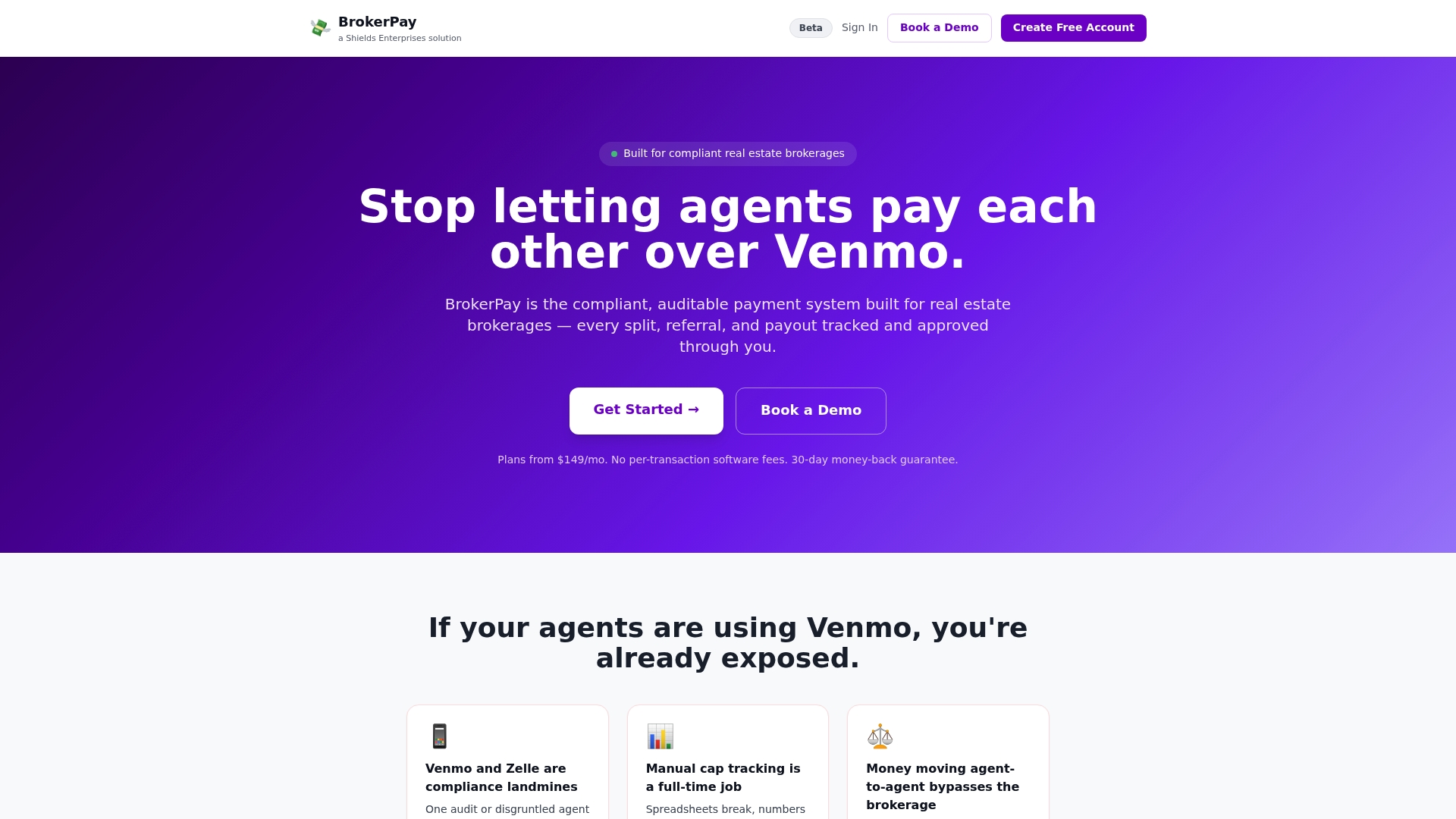
Brokerpay is built to close that gap. It tracks, documents, and processes agent splits, referral fees, and co-op commissions through a single compliant platform. Every payment is recorded, every split is documented, and every payout is processed through verified channels rather than consumer apps. Brokerages that switch to automated payouts eliminate the informal workarounds that create the most exposure. For brokerages ready to replace fragmented payment processes with a compliant, centralized system, Brokerpay is the direct solution.
FAQ
What is a real estate payment platform?
A real estate payment platform is a purpose-built system that processes, tracks, and documents financial transactions in real estate closings and brokerage operations. It replaces informal methods like email wire instructions, paper checks, and consumer apps with authenticated, auditable workflows.
How do payment platforms prevent wire fraud?
Payment platforms prevent wire fraud by delivering wire instructions through secure, login-protected portals rather than email. Multi-factor authentication and independent verification channels ensure that fraudulent instructions embedded in compromised emails cannot reach the recipient.
What does ALTA compliance require for wire transfers?
ALTA best practices require written wire procedures, multi-factor authentication, annual testing, and documented fraud response plans. Auditors specifically look for timestamped verification records and evidence of segregation of duties.
Why are Venmo and Zelle risky for real estate payments?
Venmo and Zelle are consumer apps with no audit trail, no RESPA compliance documentation, and no role-based access controls. Using them for commission splits or referral fees creates federal liability for the brokerage and leaves no defensible record if a dispute arises.
How does real-time payment tracking reduce closing risk?
Real-time tracking gives every party live status updates from payment initiation through settlement. That visibility eliminates the timing failures and miscommunications that cause contract violations, closing extensions, and lost earnest money deposits.