Top 3 Incentx.com Commission Management Alternatives 2026

Matching commission management tools to complex brokerage operations without bloated cost or limited transparency costs time and creates risk. Many established commission tools force brokerage teams into opaque pricing, limited integration, or manual reconciliation that slows audits and payouts. This list compares feature focus, workflow automation, and transparent pricing so brokerages can pick a fit without discovering hidden trade offs mid implementation.
Table of Contents
BrokerPay
At a Glance
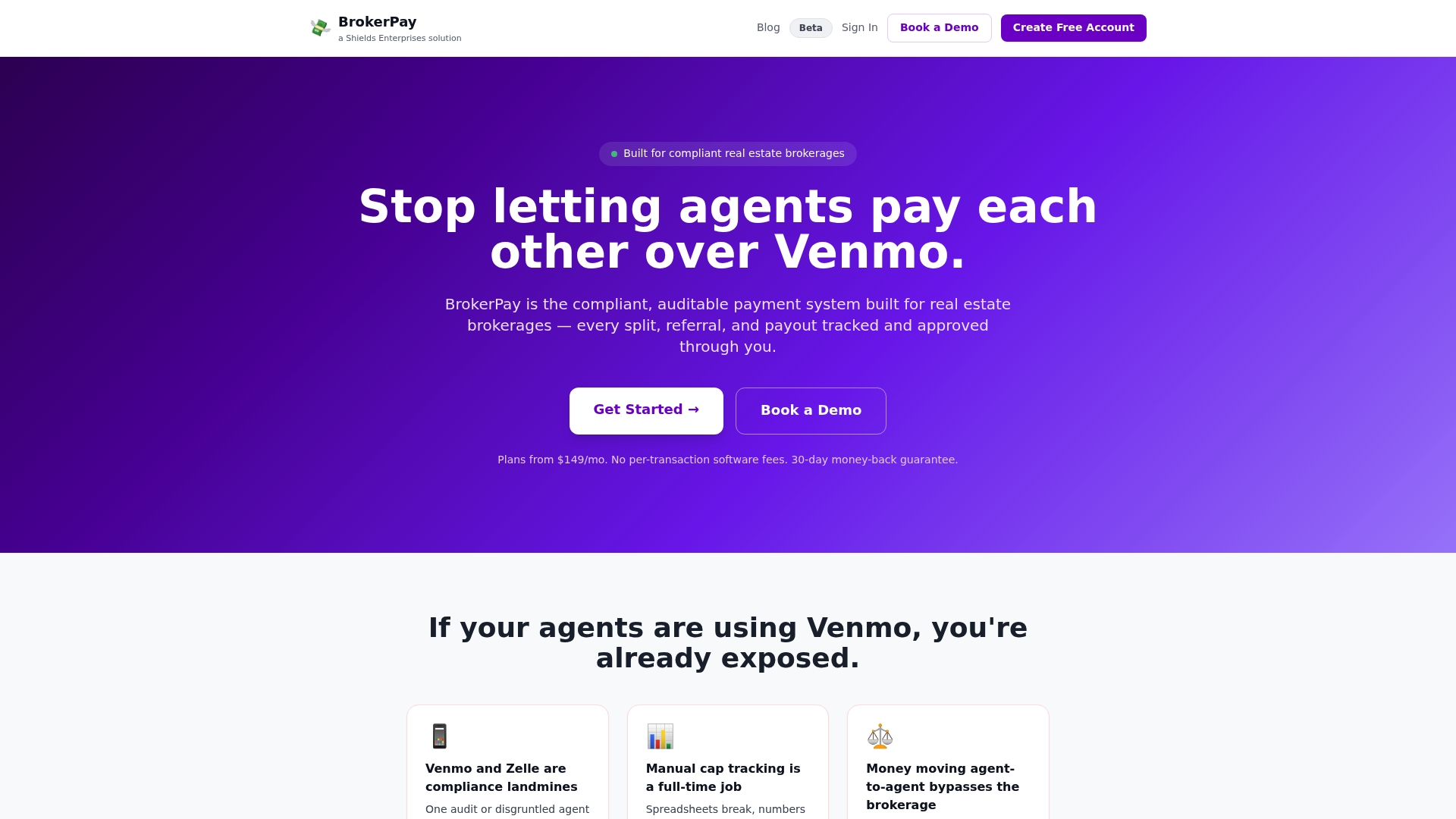
Plans start at $149 per month for up to 50 agents. That entry price makes BrokerPay practical for small to mid sized brokerages moving away from Venmo or Zelle. The platform focuses on auditable payouts and cap tracking to keep commission records clear.
Core Features
BrokerPay supports Agent Payment Approvals, Cap Tracking, and ACH transfers alongside earnest money tracking. The system records a full audit trail for every commission, referral, and co op payout so internal and external reviews see the same ledger. Automated approvals and documented transfers aim to replace informal payment workflows with traceable records.
Key Differentiator
BrokerPay centers its workflow on compliance and auditability, not just payout speed. That focus targets federal liability created by unapproved payment methods and missing paperwork. The product ties commission logic to documented approvals and transfer records inside brokerage operations.
Pros
BrokerPay is built specifically for brokerages, so its feature set matches common commission complexities like splits, referral fees, and co op commissions. The platform automates approvals and records every step, which shortens the time audit teams spend reconciling payments. Included cap tracking and earnest money controls keep commission math visible across the firm. The vendor also offers a 30 day money back guarantee for new customers.
Cons
- Potential cost considerations for smaller brokerages that handle very few transactions or agents.
Who It’s For
BrokerPay fits brokerages that manage multiple agents and need documented commission workflows. It suits firms that want to replace ad hoc payment methods with a tracked process. It also serves brokerages that must demonstrate RESPA related compliance during audits.
Unique Value Proposition
The platform combines a full audit trail with agent approvals and cap logic so every payout has a matching authorization and transfer record. That setup lowers the risk of disputed payments and federal exposure from informal transfers. For brokerages that must prove compliant money movement, this changes how audit evidence is collected and presented.
Real World Use Case
A mid sized brokerage uses BrokerPay to calculate splits and apply cap rules automatically when a deal closes. The office routes approvals through the platform and issues ACH transfers once paperwork and approvals match. Accounting closes monthly books faster because every commission payment has an attached approval and transaction record.
Pricing
Plans start from $149 per month with no per transaction fees. The vendor lists that entry tier for up to 50 agents and offers scaled or custom enterprise plans for larger brokerages. There are no publicly listed per transaction charges included in the base pricing statement.
Website: https://brokerpay.io
Brokerage Engine

At a Glance
Built by industry insiders, Brokerage Engine combines transaction, commission, accounting, listing workflow, compliance, and reporting tools into a single back office. That scope aims to remove handoffs between teams and reduce duplicate data entry across listings and commissions. The product targets brokerages that want a unified operational hub.
Core Features
Brokerage Engine centralizes transactions, commission management, accounting, listing workflows, compliance, and reporting so broker teams work from the same records. It offers real time insights and analytics plus automation to cut repetitive tasks and reduce manual errors. The platform also connects with MLS systems and provides task management with dashboards and templates for listing and marketing coordination.
Key Differentiator
Brokerage Engine’s defining angle is its origin. The product was created by people with brokerage experience and focuses on automating and integrating brokerage operations for efficiency and scale. That focus shows in built in workflows that mirror common brokerage processes rather than generic back office features.
Pros
Brokerage Engine addresses brokerage specific needs by combining transactions, commissions, accounting, listings, compliance, and reporting in one place. The platform emphasizes automation, which lowers manual reconciliation work and reduces the chance for data entry mistakes. It includes onboarding and support to help broker teams adopt new workflows and maintain reporting and compliance.
Cons
- Limited public detail: The vendor does not publish granular limitations in the supplied content, so third party reviews are needed for implementation trade offs.
- Unclear implementation effort: Implementation complexity is not detailed and could require dedicated IT or project time for larger brokerages.
- Pricing transparency: The available listing marks pricing as not applicable, so expected costs are not visible before contacting the vendor.
When It May Not Fit
Small solo brokerages that need a minimal or low cost tool may find the platform more than they need. Teams that prefer modular best of breed tools over a single unified system may not want an integrated back office. Organizations that require published, out of the box pricing before vendor contact will find the public information limited.
Notable Integrations
Brokerage Engine lists connections with MLS systems, QuickBooks Online, DocuSign Rooms, and ListTrac. The vendor also references additional integrations on its integrations page. Those connections cover accounting, e signing, listing feeds, and activity tracking.
Who It’s For
Brokerage Engine is aimed at real estate brokerages of any size that want a single back office for transactions, commissions, accounting, listings, and compliance. It fits broker leaders who plan to consolidate systems, standardize workflows, and assign staff to manage an integrated platform. The platform also suits teams that need reporting and audit trails for regulatory and brokerage oversight.
Real World Use Case
A mid sized brokerage uses Brokerage Engine to manage transactions, commissions, MLS listings, and agent onboarding. The brokerage reduced duplicate data entry and sped up closing tasks by moving listing updates and commission splits into unified workflows.
Pricing
The product entry lists pricing as not applicable and informational only. Public pricing is not provided in the supplied content. Prospective buyers must contact Brokerage Engine for specific pricing details and implementation quotes.
Website: https://brokerageengine.com
Loft47
At a Glance
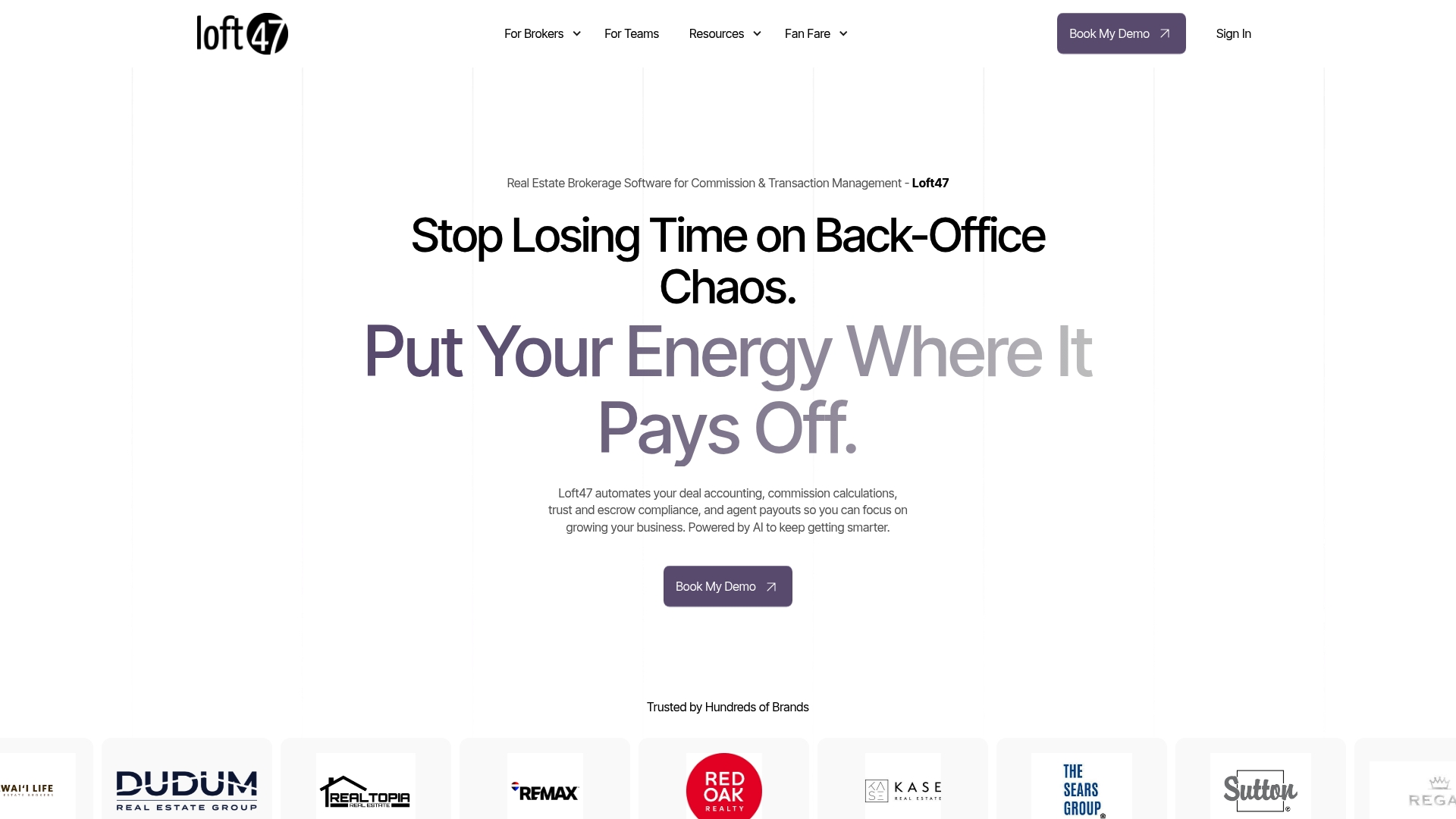
Pricing starts at $600 per month with a $47 per deal fee. That pricing model combines a monthly license with transaction fees common in brokerage software. The structure signals a platform geared toward brokerages with recurring volume rather than single agents.
Core Features
Loft47 automates deal accounting, commission calculations, trust and escrow compliance, and agent payouts in one system. The platform uses AI to reduce repetitive data entry and flag calculation errors. It also offers real time dashboards and customizable reports and connects through Loft47 Connect to transaction management and accounting tools.
Key Differentiator
The standout element is the combination of AI powered automation with deep, real estate specific integrations. That mix targets brokerages that need accurate, rules based commission calculations across teams and tiers. The integration focus lets accounting and transaction systems exchange data without repeated manual work.
Pros
Loft47 cuts manual ledger work by automating commission math and trust accounting. The product supports complex commission structures including tiers, caps, deductions, and team splits while maintaining audit trails. Integrations with Dotloop, SkySlope, QuickBooks Online, and Xero let finance and transaction teams keep records aligned and reduce reconciliation time.
Cons
-
Pricing may be prohibitive for very small brokerages or individual agents, especially once per deal fees and add ons are included.
-
Advanced setup and integrations require technical time or outside support, which can extend implementation timelines.
-
The platform relies on cloud connectivity, so offline workflows are limited or unavailable.
When It May Not Fit
If your brokerage has only a handful of transactions per month the combined license and per deal fees will raise your operating cost. Firms without dedicated back office staff may find the setup and training overhead heavy. If you need extensive offline capabilities this cloud first approach will not match your needs.
Notable Integrations
- Dotloop
- SkySlope
- QuickBooks Online
- Xero
- Docusign
- Rechat
- Payload
- Zum Rails
Who It’s For
Mid to large sized real estate brokerages and teams that process regular transaction volume will get the most value. Financial and operations directors who manage commission splits, escrow accounting, and compliance will find the reporting and integration focus useful. Smaller single agent operations will likely find the cost and implementation effort disproportionate.
Real World Use Case
A regional brokerage uses Loft47 to calculate splits for agent teams, apply caps and deductions automatically, and push entries into QuickBooks Online. The office reduces manual spreadsheet errors and closes monthly books faster. Agents receive clearer payout statements which reduces payment queries to the back office.
Pricing
Licensing starts at $600 per month plus a $47 per deal fee. Optional advanced features and custom integrations carry additional costs. Implementation and integration work may require professional services at extra charge.
Website: https://loft47.com
Comparison of alternatives
Brokerages selecting commission management software face different priorities depending on operational needs. BrokerPay focuses on compliance and auditability, Loft47 targets financial transaction automation, and Brokerage Engine centralizes operations.
Compliance vs Automation
BrokerPay stands out for its compliance-oriented setup, providing full audit trails and adhering to federal guidelines on commission workflows. This suits brokerages aiming to improve documentation and reduce disputed payments. Loft47, however, automates intricate commission calculations using AI and integrates with accounting tools, appealing to brokerages handling high transaction volumes.
Operational Integration
Brokerage Engine offers a unified operational hub, combining transaction workflows, commission oversight, listing updates, and reporting within one system. This reduces the need for multiple software tools and supports standardization across departments. Brokerages prioritizing all-in-one solutions may find this offering appealing despite the absence of upfront pricing visibility.
Best fit
- Brokerages seeking compliance and audit trails in commission handling should explore BrokerPay for its focus on documented workflows.
- Teams prioritizing operational integration across departments might prefer Brokerage Engine due to its unified system.
- Brokerages with high transaction volumes requiring detailed financial automation might pick Loft47 for its transaction-per-fee pricing model and AI capabilities.
Our pick
BrokerPay is recommended for brokerages that need auditable commission workflows and compliance integration due to its tailored, straightforward setup. Brokerages focused on deep financial integrations or unified systems may prefer competitors better aligned with those needs.
Commission management platforms vary in their integration capabilities and fit for different types of brokerages.
| Product Name | Core Feature | Key Differentiator | Best For | Pricing | Notable Limitation |
|---|---|---|---|---|---|
| Brokerpay | Agent approvals Cap tracking Audit trail | Compliance-focused workflows | Brokerages with multiple agents | $149/month for 50 agents | Potential cost for small brokerages |
| Brokerage Engine | Unified operations Back office tools | Built by brokerage insiders | Brokerages seeking operational integration | Price not published | Unclear implementation effort |
| Loft47 | AI-powered commission automation | Integration depth | Mid-large brokerages processing transactions | $600/month + $47/deal | Cost may deter small brokerages |
Challenges Brokerages Face Managing Commissions Without Audit Trails
Brokerages juggling agent splits, referral fees, and co-op commissions often struggle with payment compliance and tracking. Informal payout methods like Venmo or Zelle create federal liability risks and complicate RESPA adherence. Brokerpay tackles these issues by providing a compliant platform built for brokerages to track, document, and process all commission payouts with full audit trails.
Brokerpay offers:
- Agent payment approvals and cap tracking
- Automated ACH transfers with detailed transaction records
- Tools designed to replace informal workflows, reducing audit time
See how Brokerpay improves commission compliance.
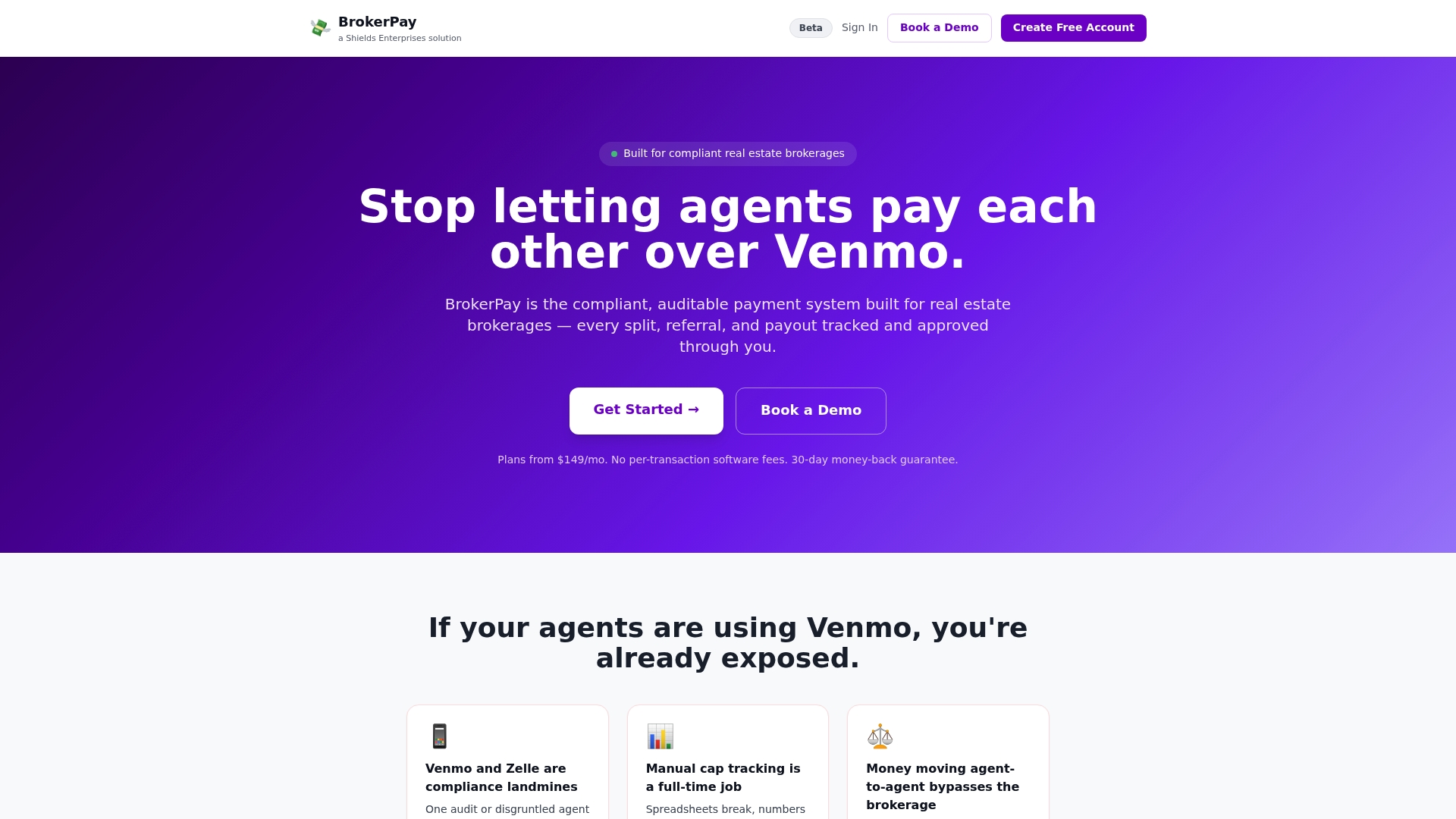
If you manage a brokerage dealing with multiple agents, eliminate the risks of unapproved payments and missing paperwork by using Brokerpay. Visit https://brokerpay.io to start using a system that enforces documented approvals and smooth payment processing.
FAQ
How does Brokerpay support commission tracking for brokerages?
Brokerpay offers detailed cap tracking and auditable payouts, making it ideal for brokerages that need clear commission records. The platform records a full audit trail for every commission, referral, and co-op payout, which enhances transparency during audits. This feature ensures that brokers can maintain compliance while effectively managing payouts.
What is the difference between Brokerpay and Brokerage Engine in terms of operations?
Brokerage Engine excels in its comprehensive approach, integrating transactions, commission management, and reporting into a single operational hub. Brokerpay, in contrast, focuses primarily on auditability and compliance, which is essential for brokerages looking to replace informal payment methods with a tracked process. Both platforms serve distinct operational needs within the brokerage space.
Does Brokerpay provide a money-back guarantee?
Brokerpay provides a 30-day money-back guarantee for new customers, allowing them to try the service with minimal risk. This assurance gives brokerages the confidence to test Brokerpay’s features without long-term commitment. Potential users can feel secure in their choice knowing they can opt-out if they find the service unsuitable.
Can I use Brokerpay if my brokerage manages a small number of agents?
Brokerpay is designed for brokerages managing multiple agents, as its entry plan starts at $149 per month for up to 50 agents. This pricing could be considered a higher expense for smaller brokerages with fewer transactions or agents, so evaluating overall transaction volume is essential before signing up. If you’re uncertain about the commitment, explore Brokerpay’s capabilities through its money-back guarantee.
How does Brokerpay help with compliance during audits?
Brokerpay emphasizes compliance by tying commission logic to documented approvals and transfer records within its platform. This design reduces federal liability related to unapproved payment methods and missing paperwork. Brokerages seeking to demonstrate RESPA-related compliance during audits will find this focus particularly beneficial.