How Brokerage Payment Workflows Get Standardized

Brokerage payment workflow standardization is the process of applying rule-based automation, structured role separation, and deterministic logic to every financial transaction a brokerage processes. This is how brokerage payment workflows get standardized in practice: you replace ad hoc approvals and manual splits with a repeatable system that produces the same output every time. Automating these workflows can reduce administrative time by up to 70% and cut processing errors by 90%. For real estate brokerages still routing commission splits through Venmo or spreadsheets, those numbers represent the gap between where you are and where your operation needs to be.
What are the core components of a standardized payment workflow?
Standardized brokerage payment procedures share a common architecture regardless of brokerage size. Every reliable system separates three distinct functions: payment initiation, approval, and execution. Collapsing these into one person or one step is the single most common source of fraud exposure and reconciliation failure.
The core components of a production-grade workflow include:
- Payment initiation layer. This is where a transaction request is created. It captures the deal details, the parties involved, and the fee structure. Nothing moves forward without a complete initiation record.
- Approval and compliance gate. A rules engine checks the request against your fee schedule, RESPA requirements, and any brokerage-specific split agreements before releasing funds.
- Execution layer. The actual transfer happens here, routed to the correct recipient via a payment service provider (PSP) or payment orchestration platform.
- Ledger and audit trail. Every state change in the transaction lifecycle writes to an immutable record. This is what protects you in a dispute or a federal audit.
- Exception handling queue. Errors do not get ignored or manually patched. They route to a defined resolution process with a clear owner.
Deterministic logic for fee calculations is non-negotiable at the execution layer. This means your system calculates agent splits, referral fees, and co-op commissions using fixed rules with no rounding ambiguity, no timezone drift, and no version conflicts. A single miscalculation at scale creates audit failures that are genuinely difficult to unwind.
Pro Tip: Assign a unique payment intent ID to every transaction at initiation. This ID travels through every layer and allows your system to automatically flag discrepancies during reconciliation without manual review.

Separating payment intent from execution and ledger settlement using these unique identifiers is what allows automatic discrepancy detection at scale. Manual reconciliation breaks increase exponentially without this structure.
How do technology integrations enable payment process standardization?
The average brokerage runs 8–12 different software tools. Moving to integrated ecosystems reduces manual effort by up to 90%. That is not a marginal improvement. It is the difference between a two-person back office and a one-person back office handling twice the volume.
The technology stack for a standardized payment workflow typically builds in this order:
- Core transaction system. Your CRM or transaction management platform (such as Dotloop or Skyslope) captures deal data. This is the source of truth for every payment downstream.
- Rules engine. A dedicated fee schedule engine applies your split agreements, referral arrangements, and compliance checks. This layer must use deterministic logic, not AI inference.
- Payment orchestration platform. This routes transactions to the right PSP based on region, currency, and risk profile. It also manages fallback providers when a primary route fails.
- Ledger and reporting layer. Every transaction writes to a synchronized ledger. This feeds your accounting system and your compliance documentation simultaneously.
The comparison below shows what a fragmented stack costs versus a unified one:
| Capability | Fragmented Stack | Unified Platform |
|---|---|---|
| Commission split calculation | Manual spreadsheet | Automated rules engine |
| Compliance documentation | Separate file storage | Embedded audit trail |
| Error rate | High, manual entry | Reduced by up to 90% |
| Reconciliation time | Hours per transaction | Minutes per transaction |
| Fraud exposure | High, no segregation | Low, role-based access |
Payment orchestration platforms handle routing by region, currency, and risk, and they use idempotent webhooks to prevent duplicate payouts. Every payment event processes exactly once and links to an immutable ledger entry. That is the technical foundation of a compliant audit trail.
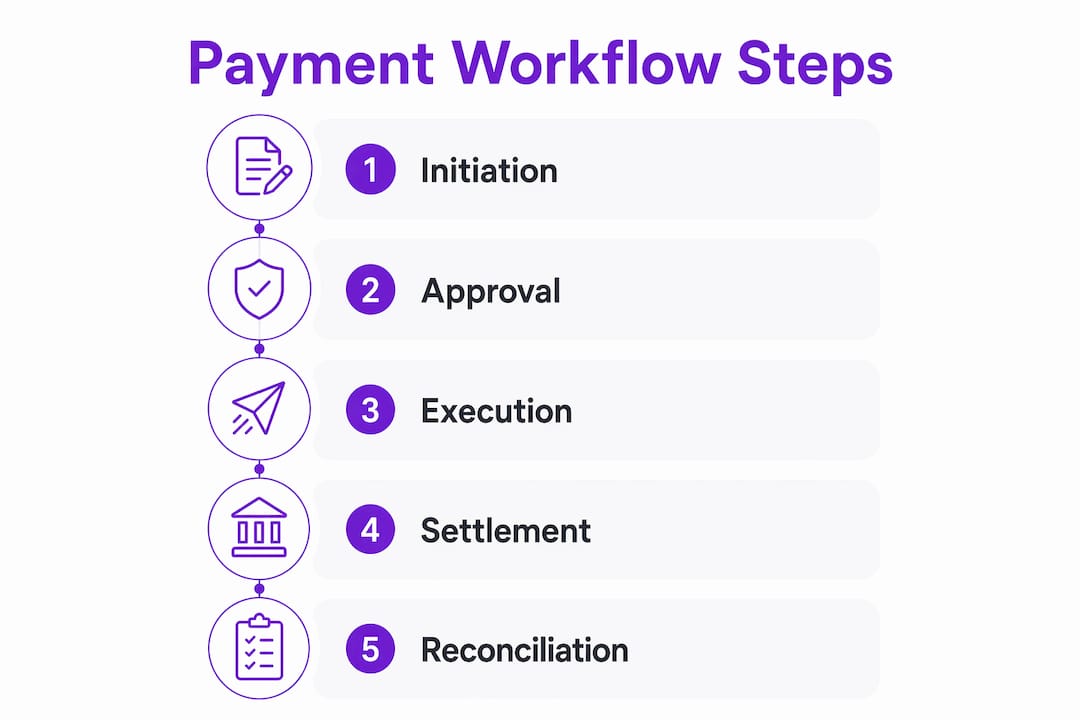
A real estate payment gateway sits at the center of this stack, connecting your transaction data to the financial rails that move money. Choosing one built for real estate, rather than retrofitting a generic e-commerce gateway, eliminates a significant category of integration problems.
What operational model changes make standardization stick?
Scaling payment workflows is an operating model challenge, not a technology problem. You can buy the best orchestration platform available and still fail if your team’s roles and responsibilities do not match the system’s design. This is the lesson most brokerages learn the hard way.
The operational changes that matter most are:
- Assign clear ownership at each workflow stage. One person initiates. A different person approves. A third executes or the system executes automatically. No single person controls all three steps.
- Embed exception handling into the workflow itself. Errors should not go to a separate inbox or a sticky note on someone’s monitor. They route to a defined queue with a resolution deadline and an assigned owner.
- Document your governance model before you automate. Automation locks in whatever process you have. If your current process is broken, automation makes it break faster and at higher volume.
- Align your workflow states with your compliance requirements. Every state in the transaction lifecycle should map to a specific RESPA or state licensing obligation. This makes audits straightforward rather than stressful.
Pro Tip: Before selecting any payment platform, map every state your transactions move through from initiation to final settlement. Vendors who cannot show you how their system handles your specific states are not ready for production use.
Segregation of duties aligned with FCA-style governance expectations is the structural standard that prevents both fraud and institutional knowledge loss. When one person holds all payment knowledge in their head, their departure creates an operational crisis. Documented, role-separated workflows survive personnel changes.
The shift from reactive to structured also means retiring the habit of treating every exception as a one-off problem. If the same exception type appears more than twice, it belongs in your rules engine as a defined case, not in someone’s email thread.
What ROI do brokerages see from standardizing payment workflows?
The financial case for payment process standardization is well documented. Brokerages that automate payout workflows report up to 50% time savings on chargeback and payout automation, with significant reductions in risk exposure. The operational gains compound as volume grows.
“Brokerages increased capacity from 15–25 to 35–50 loads per broker after standardizing workflows, with initial setup ROI often achieved within months at implementation costs of $10,000–$50,000.”
The table below summarizes the measurable outcomes brokerages report after standardizing their payment workflows:
| Metric | Before Standardization | After Standardization |
|---|---|---|
| Administrative time per transaction | High, variable | Reduced by up to 70% |
| Processing errors | Frequent, manual | Reduced by up to 90% |
| Loads processed per broker | 15–25 per period | 35–50 per period |
| Reconciliation failures | Exponential at scale | Near zero with intent IDs |
| Partner trust | Low, payment uncertainty | High, escrow-backed frameworks |
Escrow-backed payment frameworks formalize payout rules and increase partner trust by removing payment uncertainty from co-op transactions. Visa’s AFT model and similar near-real-time settlement frameworks are now accessible to mid-size brokerages, not just enterprise firms. That shift addresses one of the most persistent complaints from co-op agents: not knowing when or whether they will get paid.
The ROI timeline for most brokerages is shorter than expected. Implementation costs in the $10,000–$50,000 range recover within months when you account for the staff hours eliminated, the errors avoided, and the compliance exposure reduced. Automated commission tracking also reduces tax filing complexity for agents, which is a retention benefit that does not show up in the direct ROI calculation but matters at renewal time.
Key takeaways
Standardizing brokerage payment workflows requires deterministic rules, clear role separation, and integrated technology working together as a system, not as separate fixes.
| Point | Details |
|---|---|
| Separate initiation, approval, execution | No single person should control all three steps; this prevents fraud and reconciliation failures. |
| Use deterministic logic, not AI | Fee calculations and compliance checks must use fixed rules to avoid rounding errors and audit failures. |
| Unified platforms outperform fragmented stacks | Moving from 8–12 tools to an integrated ecosystem reduces manual effort by up to 90%. |
| Embed exception handling in the workflow | Errors routed to defined queues with owners resolve faster and do not become recurring problems. |
| ROI arrives faster than expected | Brokerages report up to 70% time savings and capacity gains from 25 to 50 loads per broker after standardization. |
Why most brokerages standardize too late
I have watched brokerages delay payment standardization until a compliance audit forces the issue. By that point, the cost is not just the platform fee. It is the staff hours reconstructing transaction histories, the legal exposure from undocumented splits, and the agent relationships damaged by payment delays or errors.
The argument I hear most often for delay is that the current system “works well enough.” What that usually means is that one person in the back office knows how everything works and compensates for every gap manually. That is not a system. That is institutional knowledge sitting in one person’s head, one resignation away from an operational crisis.
The technology side of this is genuinely less complicated than most brokerage owners expect. The hard part is the operating model: deciding who owns each step, documenting your fee schedules as rules rather than as tribal knowledge, and committing to exception handling as a process rather than a favor. I have seen brokerages with excellent technology still fail at standardization because they never resolved the governance question.
My strong view is that deterministic logic must handle every financial calculation. AI tools have real value in parsing documents and flagging anomalies, but the moment you let a probabilistic system make a payment routing decision, you have introduced risk that no audit trail can fully mitigate. The compliant co-op payment workflows that hold up under scrutiny are built on fixed rules, not flexible inference.
Start with your workflow states. Map every step from deal close to final disbursement. Find the steps that live in someone’s head rather than in a documented rule. Those are your highest-risk points and your highest-value targets for standardization.
— Wes
How Brokerpay helps brokerages replace manual payment systems
Real estate brokerages processing agent splits, referral fees, and co-op commissions through Venmo or Zelle are creating federal liability with every transaction. Brokerpay is built specifically to eliminate that exposure.
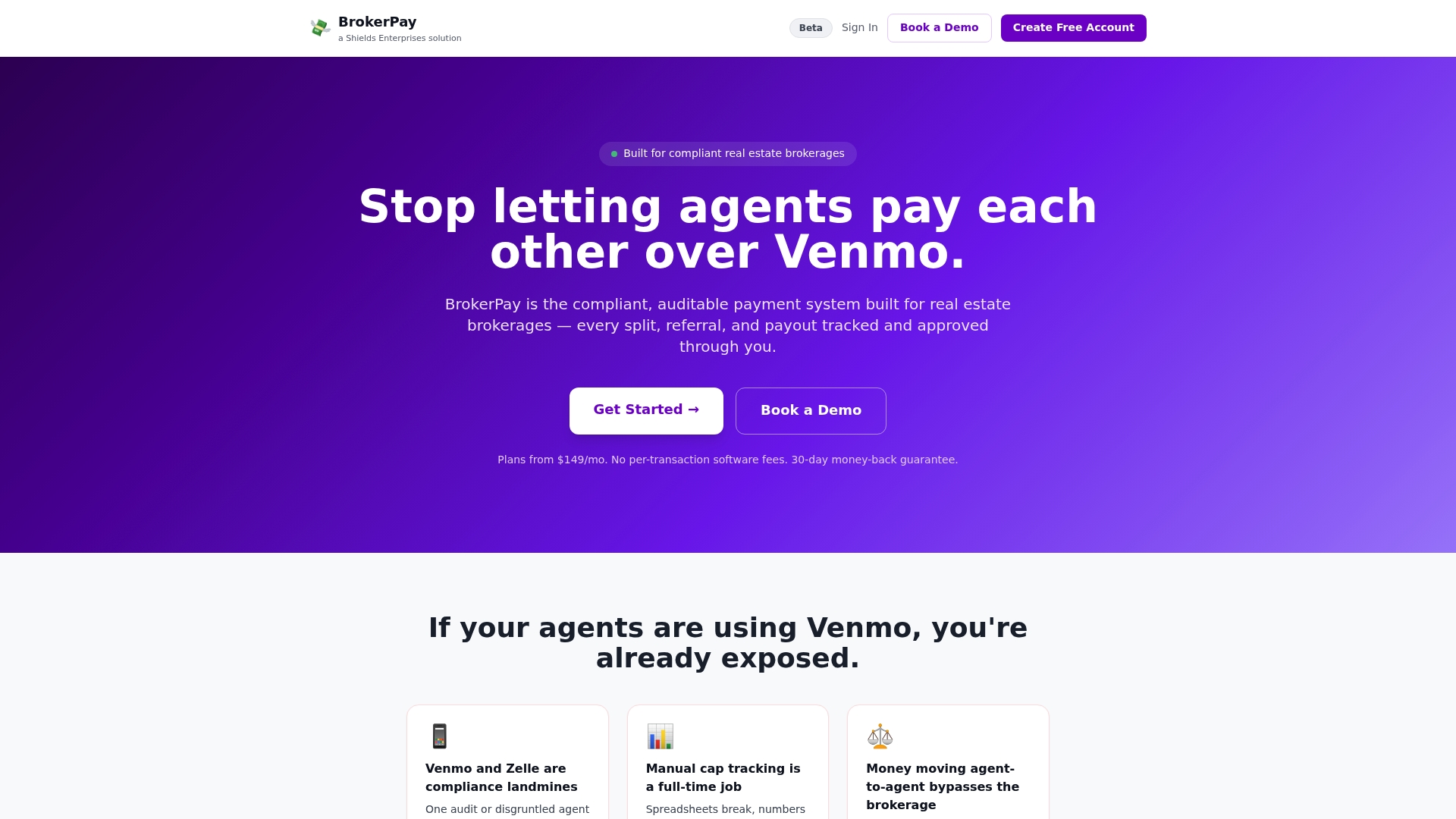
Brokerpay tracks, documents, and processes every payment type a brokerage handles, keeping you RESPA-compliant and giving you a full audit trail for every disbursement. The platform connects to your existing transaction systems and replaces the manual workarounds that create risk. If you are ready to move away from manual payouts and build a payment process that scales, Brokerpay is the purpose-built solution for real estate brokerages. Visit Brokerpay to see how the platform works.
FAQ
What does standardizing brokerage payments actually mean?
Standardizing brokerage payments means replacing manual, person-dependent processes with rule-based systems that produce consistent, documented outcomes for every transaction. This includes automated fee splits, compliance checks, and audit trails.
Why can’t brokerages just use venmo or zelle for splits?
Venmo and Zelle create RESPA compliance exposure because they produce no compliant documentation of the payment relationship between broker and agent. Federal liability attaches to undocumented commission disbursements regardless of the dollar amount.
How long does it take to see ROI from payment automation?
Most brokerages recover implementation costs within months. Automation reduces administrative time by up to 70% and processing errors by up to 90%, which translates directly to staff hour savings and reduced compliance risk.
What is a payment orchestration platform?
A payment orchestration platform routes transactions to the correct payment service provider based on region, currency, and risk, and uses idempotent webhooks to prevent duplicate payouts. It creates a synchronized audit trail across every transaction.
What is the biggest mistake brokerages make when standardizing workflows?
The most common mistake is automating a broken process without first documenting and fixing the underlying rules. Automation scales whatever process you have, so undocumented fee agreements and informal approval habits become high-volume problems faster than expected.