How Outside Referral Fees Get Processed in 2026

Outside referral fees in real estate are broker-to-broker payments made when one licensed brokerage sends a client to another, with the receiving brokerage paying a portion of its earned commission back to the referring brokerage at closing. Understanding how outside referral fees get processed is not optional for compliance-focused brokers. Payment must flow through licensed brokerage accounts, never directly to individual agents or unlicensed persons. Federal rules under RESPA, state licensing laws, and IRS tax reporting requirements all govern this process. Get any step wrong and you risk license sanctions, backup withholding, or unenforceable fee claims.
How outside referral fees get processed: the standard steps
Referral fee processing in real estate follows a defined sequence. Skipping any step creates legal exposure or payment delays that are entirely avoidable.
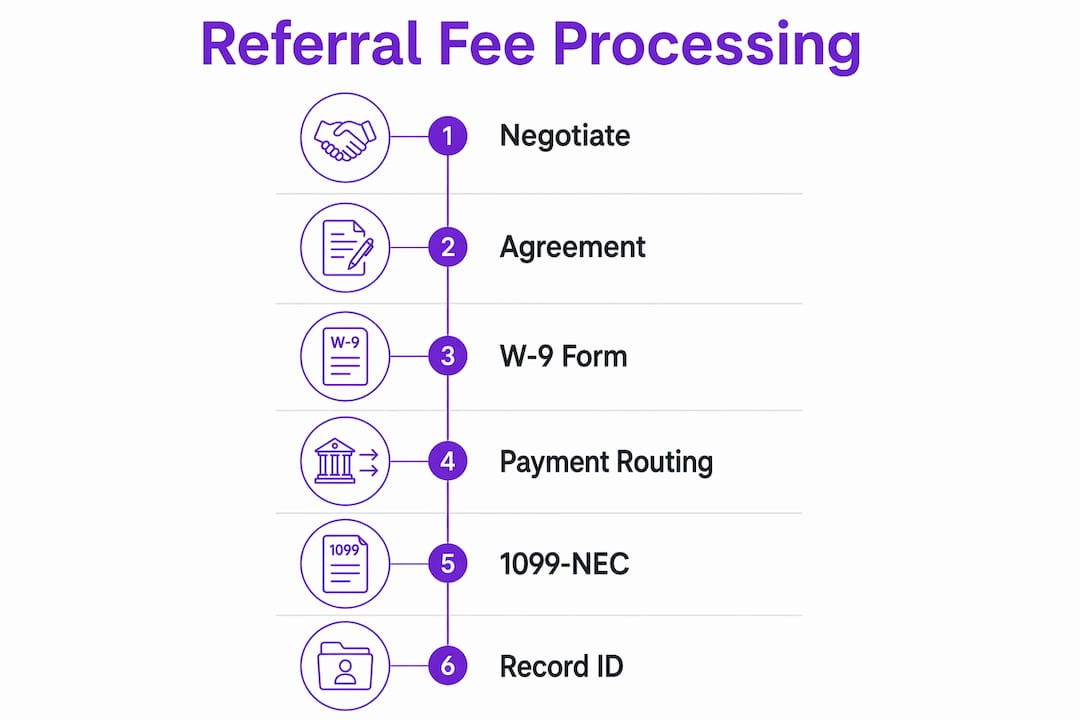
Step 1: Negotiate and document the fee before the referral is made. Referral fees typically range from 20% to 35% of the gross commission earned by the receiving broker. That percentage is negotiable between the two brokerages, but the agreement must be in writing before the client is transferred. Following the 2024 NAR settlement, buyer agent compensation is now negotiated directly with clients, which means the receiving agent’s actual commission determines the referral fee base. A 25% referral on a reduced buyer-side commission pays out less than it would have pre-settlement. Both brokers need to account for this when setting the percentage.

Step 2: Execute a signed referral agreement. The agreement must name both brokerages, identify the referred client, state the fee percentage, define the payment trigger (typically the closing date), and include a client protection period. A client protection period protects the referring broker’s fee when a referred client closes a transaction months after the initial introduction. Without this clause, a receiving broker could argue the referral relationship had lapsed. Verbal agreements are functionally unenforceable in most states, including Florida and California. Sign the contract before the client makes contact with the receiving agent.
Step 3: Collect a W-9 from the referring brokerage. Collecting W-9 forms early prevents backup withholding and eliminates reporting errors at tax time. Waiting until after closing to request a W-9 is one of the most common processing errors brokers make. It delays payment and creates IRS compliance risk for the paying brokerage.
Step 4: Route payment through brokerage accounts at closing. Referral fee payments must flow through the paying broker’s trust or operating account to the referring broker’s brokerage account. Paying an individual agent directly violates state licensing laws in California, Florida, and most other jurisdictions. The referring brokerage then splits the received fee with its agent according to their internal agreement.
Step 5: Issue Form 1099-NEC if the fee reaches $600 or more. Form 1099-NEC is required for any referral fee payment of $600 or more paid to another brokerage or individual during the tax year. The paying brokerage carries this obligation. Missing this filing triggers IRS penalties and creates audit exposure.
Pro Tip: Assign a unique referral ID to every transaction in your CRM at the time the referral agreement is signed. This ID links the agreement, the W-9, and the eventual payment record, making 1099 reconciliation at year-end a 20-minute task instead of a two-day search.
What RESPA and state licensing rules mean for referral fee compliance
RESPA is the federal law most brokers associate with referral fee restrictions, but its application is more specific than most people realize. RESPA Section 8 prohibits referral fees between settlement service providers, such as title companies, lenders, and escrow agents, but it explicitly permits broker-to-broker referral fees between licensed real estate professionals. The distinction matters because many brokers incorrectly believe all referral fees carry RESPA risk.
The actual compliance requirements for processing outside referral fees under RESPA and state law include:
- Both parties must hold active real estate broker licenses in their respective states. Paying a referral fee to an unlicensed person is illegal in every U.S. jurisdiction.
- The fee must represent fair compensation for the referral service, not a disguised kickback for steering clients toward specific settlement service providers.
- No portion of the referral fee can be paid to a party who did not perform a legitimate referral service.
- The fee must be disclosed in the transaction documentation where required by state law.
“Referral relationships should be built on professional trust and genuine client service, not compensation expectations. That distinction is what keeps broker-to-broker referrals on the right side of RESPA.” — NAR
State-level rules add another layer. California requires that all referral fees be paid through the broker of record, not directly to a salesperson’s personal account. Florida law specifies that written referral agreements are the only enforceable mechanism for fee claims. Brokers operating across state lines face both sets of rules simultaneously, which is why documentation and payment routing discipline are non-negotiable.
Best practices for managing referral fee payments without errors
Most referral fee disputes and compliance failures trace back to process gaps, not bad intentions. These practices close those gaps before they become problems.
- Execute the agreement before the referral, not after. Once a client has been introduced to the receiving agent, your negotiating position weakens and your legal protection disappears. The signed contract is your only enforceable claim to the fee.
- Specify the payment trigger precisely. “Within 30 days of closing” is enforceable. “Upon completion of the transaction” is vague enough to generate disputes. Name the exact event and the exact timeline in the agreement.
- Include a client protection period of at least 12 months. Real estate transactions frequently take longer than expected. A client protection clause covering 12 to 24 months after the referral date protects your fee regardless of when the client closes.
- Track every referral in your CRM with a unique identifier. When a transaction closes eight months after the referral was made, you need a paper trail connecting the original agreement to the commission disbursement. Manual spreadsheets fail at this. A CRM with referral tracking does not.
- Collect the W-9 at agreement signing, not at closing. Failure to collect W-9 forms before payment risks backup withholding and incorrect 1099 filings, both of which delay payouts and create tax issues for both brokerages.
- Never use Venmo, Zelle, or personal payment apps for referral fee disbursements. These platforms create no audit trail, violate brokerage account routing requirements, and generate federal liability. Every payment must move through licensed brokerage accounts.
Pro Tip: If you receive a referral fee as income, you can deduct legitimate business expenses against it, such as marketing costs or CRM subscription fees. Structure your referral income through your brokerage entity and track deductions from the moment the agreement is signed, not at tax time.
How do interstate referral fees get processed legally?
Interstate referral fee processing follows the same brokerage-to-brokerage routing rule, but adds a license verification requirement that many brokers overlook. Interstate referral fees require verifying the license status of the out-of-state broker before any payment is made. Paying a fee to a brokerage whose license has lapsed exposes the paying broker to regulatory sanctions.
The table below compares how California and Florida handle key aspects of interstate referral fee processing.
| Requirement | California | Florida |
|---|---|---|
| License verification | Active California broker license required for receiving party | Active Florida broker license required; out-of-state brokers must verify Florida license of receiving party |
| Payment routing | All fees paid through broker of record’s account | All fees paid through licensed Florida brokerage account |
| Written agreement | Mandatory before referral is made | Mandatory; verbal agreements are unenforceable |
| Client protection period | Recommended; no statutory minimum | Recommended; typically 12 to 24 months in practice |
| 1099-NEC obligation | Paying brokerage responsible at $600+ threshold | Paying brokerage responsible at $600+ threshold |
The practical implication is straightforward. Before you wire a referral fee to an out-of-state brokerage, pull their license from the state’s public database and save a screenshot to the transaction file. This takes three minutes and eliminates the single largest compliance risk in interstate referral fee processing. The referral agreement itself should also specify which state’s law governs the contract, particularly when the referring and receiving brokerages operate in different jurisdictions.
For brokers who regularly send referrals across state lines, a buyer’s agent referral network can simplify partner vetting by maintaining pre-verified relationships with licensed brokerages in multiple states.
Key takeaways
Processing outside referral fees correctly requires written agreements, brokerage-to-brokerage payment routing, W-9 collection before closing, and 1099-NEC filing at the $600 threshold. Every step is mandatory, not optional.
| Point | Details |
|---|---|
| Fee range and negotiation | Referral fees typically run 20% to 35% of gross commission and must be agreed in writing before the referral is made. |
| Brokerage routing is mandatory | Payments must flow through licensed brokerage accounts; direct payments to individual agents violate state law. |
| W-9 before payment | Collect the W-9 at agreement signing to prevent backup withholding and 1099 filing errors. |
| RESPA permits broker referrals | RESPA Section 8 prohibits settlement service provider fees but explicitly allows licensed broker-to-broker referral payments. |
| Interstate license verification | Verify the out-of-state broker’s active license status before issuing any payment across state lines. |
What I’ve learned from watching brokers get this wrong
Wes here. After years of working with real estate brokerages on payment compliance, the pattern I see most often is not fraud. It is informality. A broker sends a referral to a colleague in another state, they shake hands on 25%, and then nine months later when the deal closes, nobody can find a signed agreement. The referring broker gets nothing. The receiving broker pays nothing. And both of them are frustrated with each other.
The fix is not complicated. It is a signed PDF, a W-9, and a CRM entry. That is the entire system. But brokers who have been doing this for 20 years on handshakes resist it because it feels bureaucratic. What it actually is, is protection. For both sides.
The second pattern I see is the Venmo problem. A receiving agent pays the referring agent directly from their personal account because it is faster and the broker is not involved. This is a federal compliance issue, not a minor paperwork gap. RESPA and state licensing laws require brokerage-to-brokerage routing for a reason. When you bypass that, you are not saving time. You are creating liability that your broker will eventually have to answer for.
The brokers who handle referral fee processing well treat it like any other financial transaction in their business. They have a checklist, they use their CRM, and they do not release payment until the documentation is complete. That discipline is what separates the brokerages that scale from the ones that spend their time in disputes.
— Wes
How Brokerpay handles referral fee processing for compliant brokerages
Managing referral fee processing manually means chasing W-9s, reconciling spreadsheets, and hoping your payment routing holds up under a compliance audit. Brokerpay eliminates that exposure.
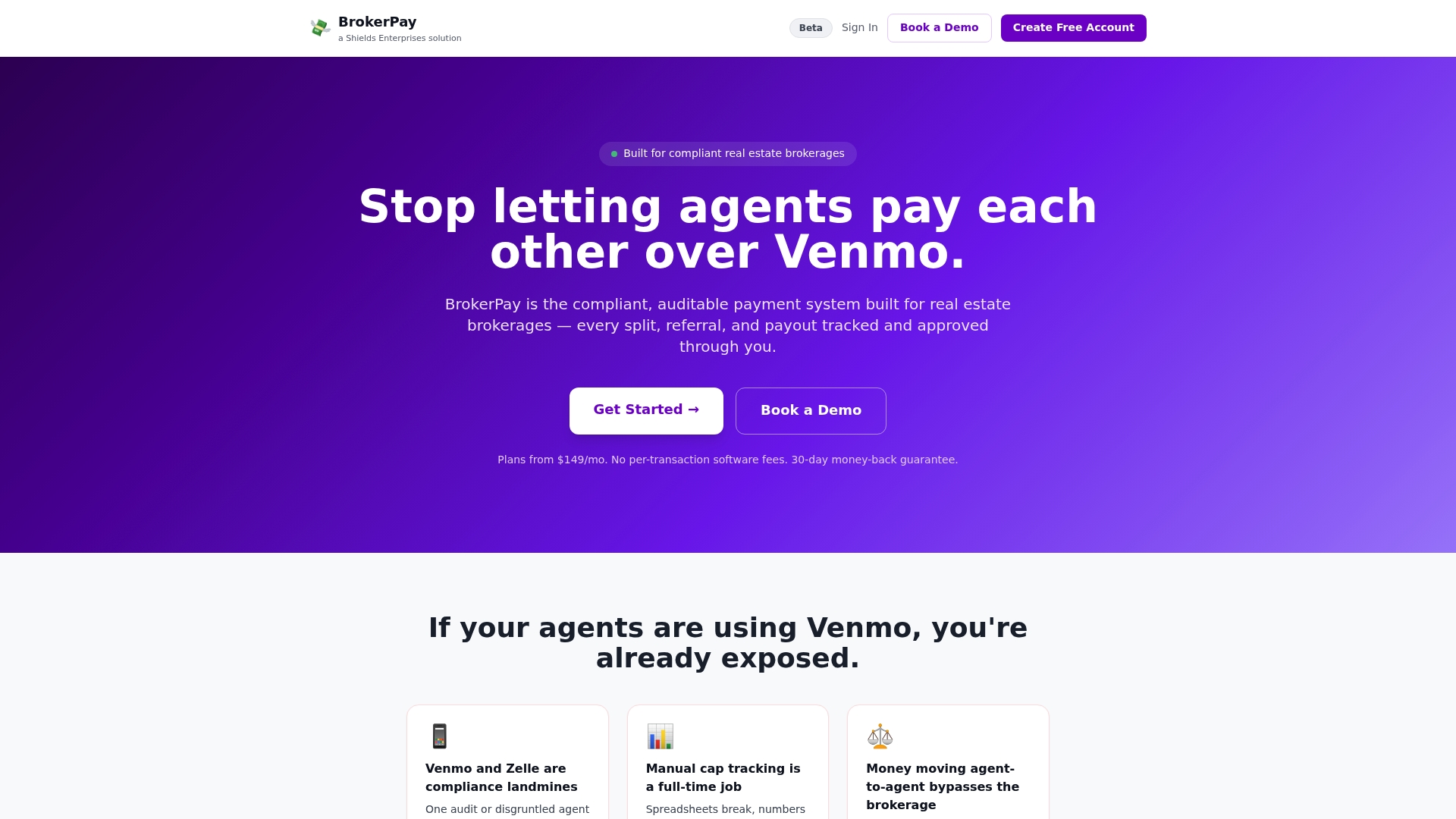
Brokerpay routes referral fees through brokerage accounts automatically, maintains a full documentation trail for every transaction, and integrates 1099-NEC filing so your year-end reporting is already done before tax season arrives. Every payment is tied to a signed agreement, a verified W-9, and a transaction record. No Venmo workarounds. No missing paperwork. No federal liability. If you are ready to process referral fees compliantly without building a manual system from scratch, Brokerpay is built for exactly that. You can also explore compliant co-op payment workflows to see how other brokerages have structured their payment processes.
FAQ
What percentage is a standard outside referral fee?
Referral fees typically range from 20% to 35% of the gross commission earned by the receiving brokerage. The exact percentage is negotiable and must be documented in a signed referral agreement before the client is transferred.
Can a referral fee be paid directly to an agent?
No. Referral fee payments must flow through licensed brokerage accounts. Paying an individual agent directly violates state licensing laws in California, Florida, and most other U.S. jurisdictions.
When is a Form 1099-NEC required for a referral fee?
The paying brokerage must issue Form 1099-NEC when the total referral fee paid to a brokerage or individual reaches $600 or more in a calendar year. Failure to file triggers IRS penalties.
Are referral fees legal under RESPA?
Yes. RESPA Section 8 prohibits referral fees between settlement service providers such as lenders and title companies, but it explicitly permits broker-to-broker referral fees between licensed real estate professionals.
What happens if there is no written referral agreement?
Verbal referral agreements are unenforceable in most states, meaning the referring broker has no legal claim to the fee if the receiving broker refuses to pay. Always execute a signed written agreement before making the referral.